

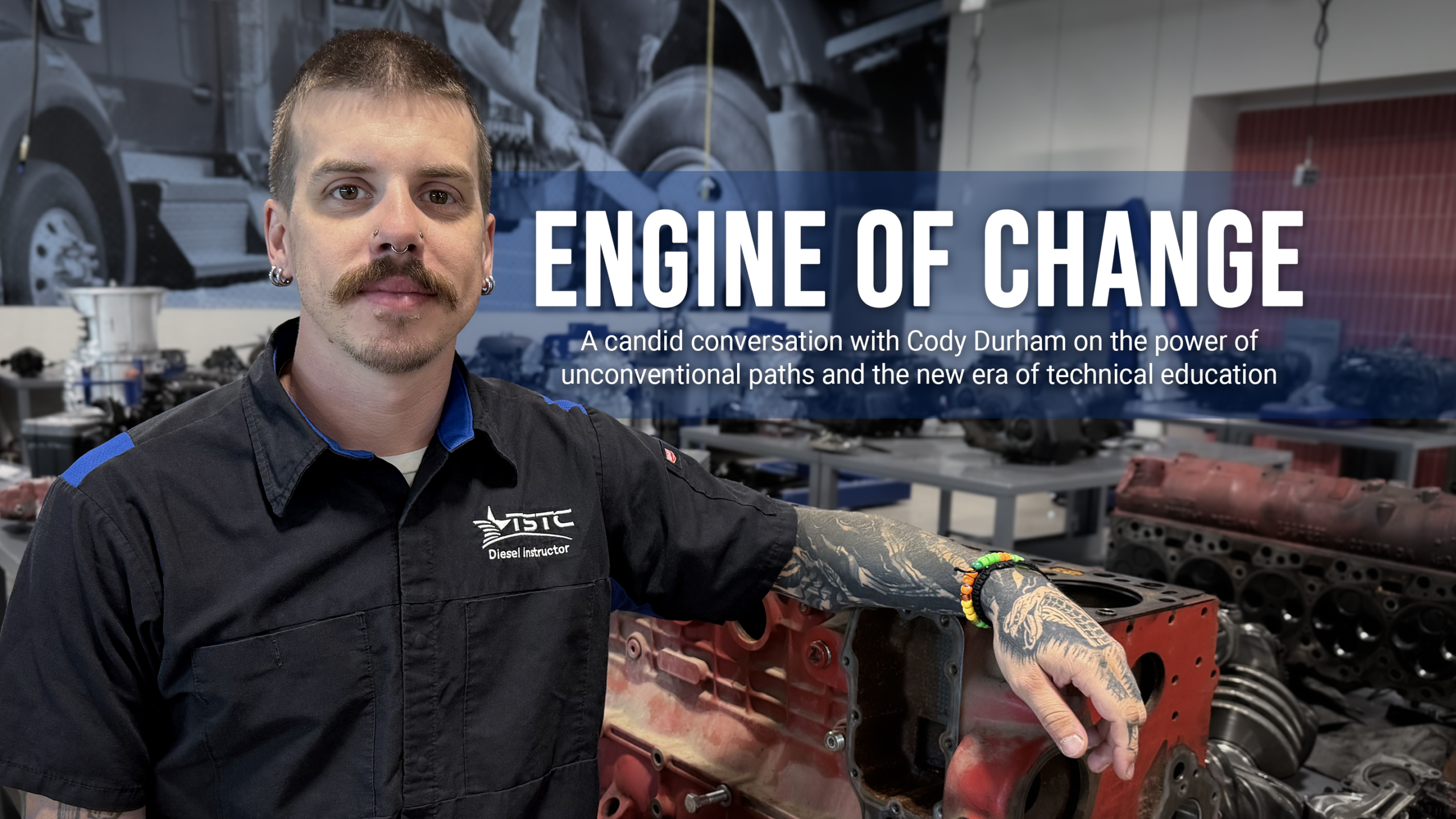
THE ENGINE OF CHANGE
A candid conversation with Cody Durham on the power of unconventional paths and the new era of technical education
The air in the lab is a distinct, industrial cocktail — warm hydraulic oil, the subtle scent of electrical ozone and the electric tension of young minds under pressure. There are no rows of wooden desks or droning projectors here; instead, massive mechanical systems and sleek, software-driven diagnostic areas form the backdrop.
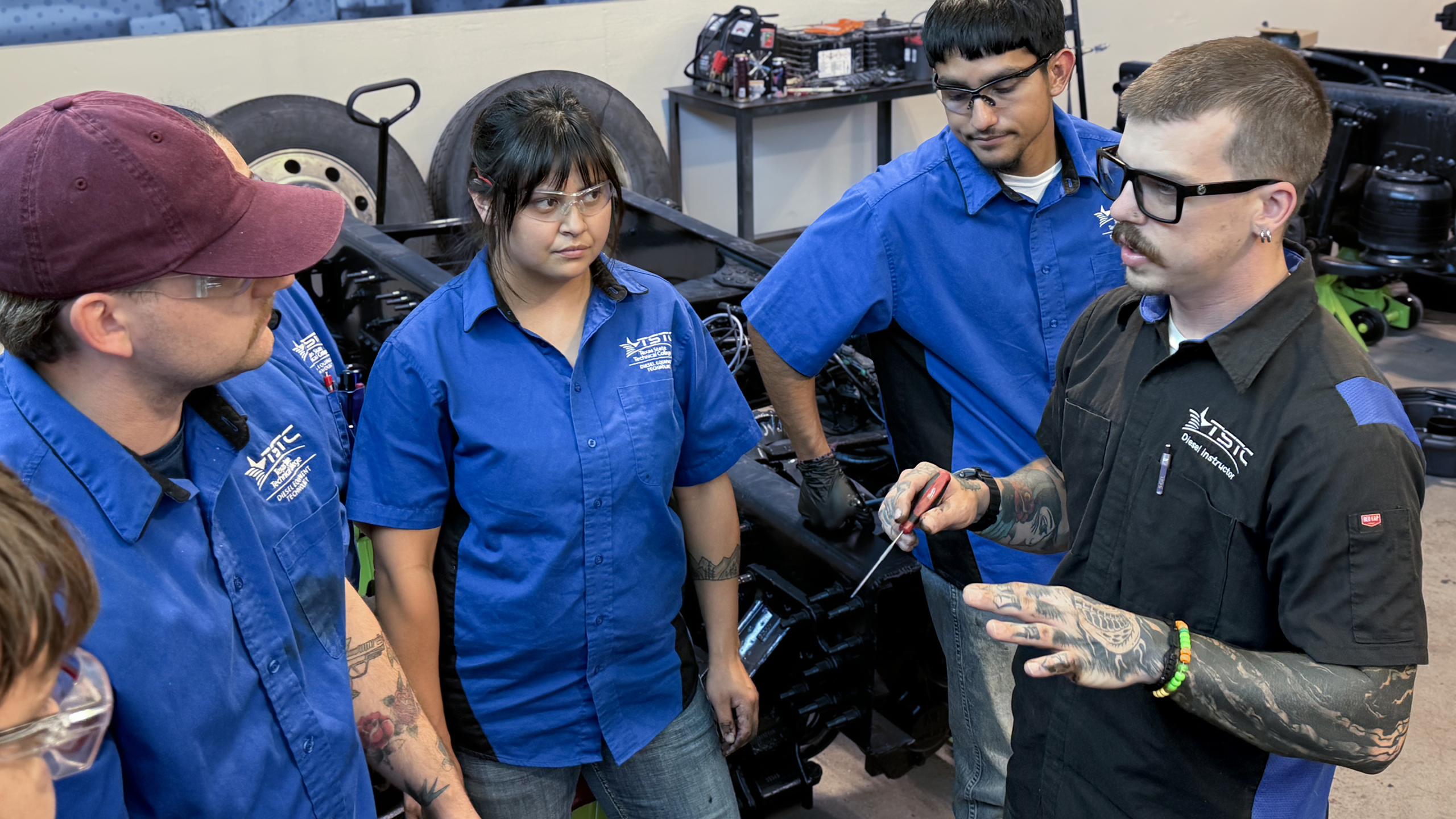
At the center of it all stands Cody Durham — sleeves rolled up, watching a student wrestle with a rogue data stream. Cody doesn’t look like your traditional academic, and that is precisely why he has built a reputation as one of the most effective collegiate instructors in technical education today.
Long before he was running a premier technology program at Texas State Technical College, Cody made a decision that would terrify most guidance counselors: he walked away from high school. Refusing to let a rigid, one-size-fits-all system define his potential, he earned his GED, jumped headfirst into the shop floor trenches, and built his expertise piece by demanding piece.
From grease-stained rags to state-of-the-art computer diagnostic arrays, Cody learned that true mastery isn’t handed down in a lecture hall — it is earned through trial, error, and an unyielding commitment to self-directed learning.
Today, Cody stands at the frontline of an educational paradigm shift, actively dismantling the outdated stigma that a four-year university degree is the only ticket to a prosperous career. In this wide-ranging, candid conversation, Cody opens up about the pain of dropping out, the humility taught by the shop floor, why he banned PowerPoint slides in favor of high-stakes service center simulations, and his ultimate message to any student who feels like they don’t fit into society’s standard box.
TSTC: You’ve built a reputation for being one of the most effective instructors in your department, but your path here wasn’t exactly the traditional academic route. Can you tell us about the decision to leave high school and how that moment shaped your professional identity?
Cody: Leaving high school was one of the most consequential decisions of my life. At the time, it wasn’t a statement against education — it was a recognition that the traditional structure simply wasn’t working for me. I struggled with the way learning was being delivered. Once I stepped away, I realized that my education was no longer something that happened to me; it became something I had to take personal responsibility for.
That experience shaped my professional identity in huge ways. Because I didn’t follow a conventional academic path, I developed a deep appreciation for self-directed learning, persistence and adaptability. I learned how to seek out knowledge, ask tough questions, and build skills independently. Those habits have stayed with me throughout my career. As an instructor, that background directly influences how I work with students. I know that talent and curiosity don’t always fit neatly into traditional educational models. Some students thrive in standard environments, while others need different approaches, different timelines or different forms of support. My own journey reminds me daily not to mistake a person’s current circumstances for their ultimate potential.
TSTC: What would you say to a high schooler sitting in a classroom right now, feeling completely disconnected and thinking about walking away?
Cody: I would tell them: do not confuse being disconnected with being incapable. There are times when school can feel irrelevant, frustrating or completely disconnected from the person you’re becoming. I’ve been there. When you’re sitting in a classroom that doesn’t seem to speak to your interests or strengths, it’s easy to conclude that the problem is education — or worse, that the problem is you.
Before making a life-changing decision, ask a different question: What exactly is making me want to leave? Is it the specific classes? The environment? A lack of challenge? Personal circumstances? Feeling like there’s no bridge between school and your future? The answer matters, because different problems require different solutions. Leaving should never be a reaction to a temporary feeling. Education is a tool, and once you walk away from a path, it can become harder to access opportunities later. Make sure you’re moving toward something, not just running away from something.
TSTC: But for a lot of teenagers, the traditional path feels like the only path being pushed.
Cody: Exactly, and success is not reserved solely for people who follow a perfect, traditional line. Many accomplished people have taken unconventional routes. What separates those who succeed from those who struggle isn’t whether they stayed in school every step of the way — it’s whether they remain committed to learning, growing, and taking responsibility for their future.
Don’t give up on your education, even if you’re questioning your current setting. Talk to people you trust. Look at technical programs, dual credit courses, apprenticeships or career academies that might fit you better. Remember that how you feel at 16 or 17 is not a reliable predictor of what you’re capable of becoming at 25 or 40. Your future should be shaped by careful decisions, not by a bad semester. The goal isn’t simply to stay in school or leave school; the goal is to keep building a life that gives your talents somewhere to grow.
TSTC: Let’s talk about that shop floor experience. You spent years in the trenches before you ever stood in front of a whiteboard. What did those years in the lab teach you that you can’t learn from a textbook?
Cody: The shop teaches humility. A textbook can explain principles, equations and best practices. It can tell you how a process is supposed to work. But the shop floor shows you how the real world behaves when materials vary, instruments drift, deadlines loom and nothing goes according to plan.
You learn that expertise is often less about having the right answer immediately and more about asking the right question when something unexpected happens. You learn to trust data over assumptions, because reality doesn’t care how confident you are. Furthermore, technical fields aren’t just about equipment and code; they’re about people, teamwork and shared expertise. The most valuable lessons often come from technicians, operators and machinists who have spent years observing details that never make it into an instruction manual. Knowledge lives in people as much as it lives in books.
TSTC: TSTC’s teaching style is legendary for being unconventional, and you’re known for ditching standard PowerPoint presentations to turn your classroom into a simulated service center. Why take that approach?
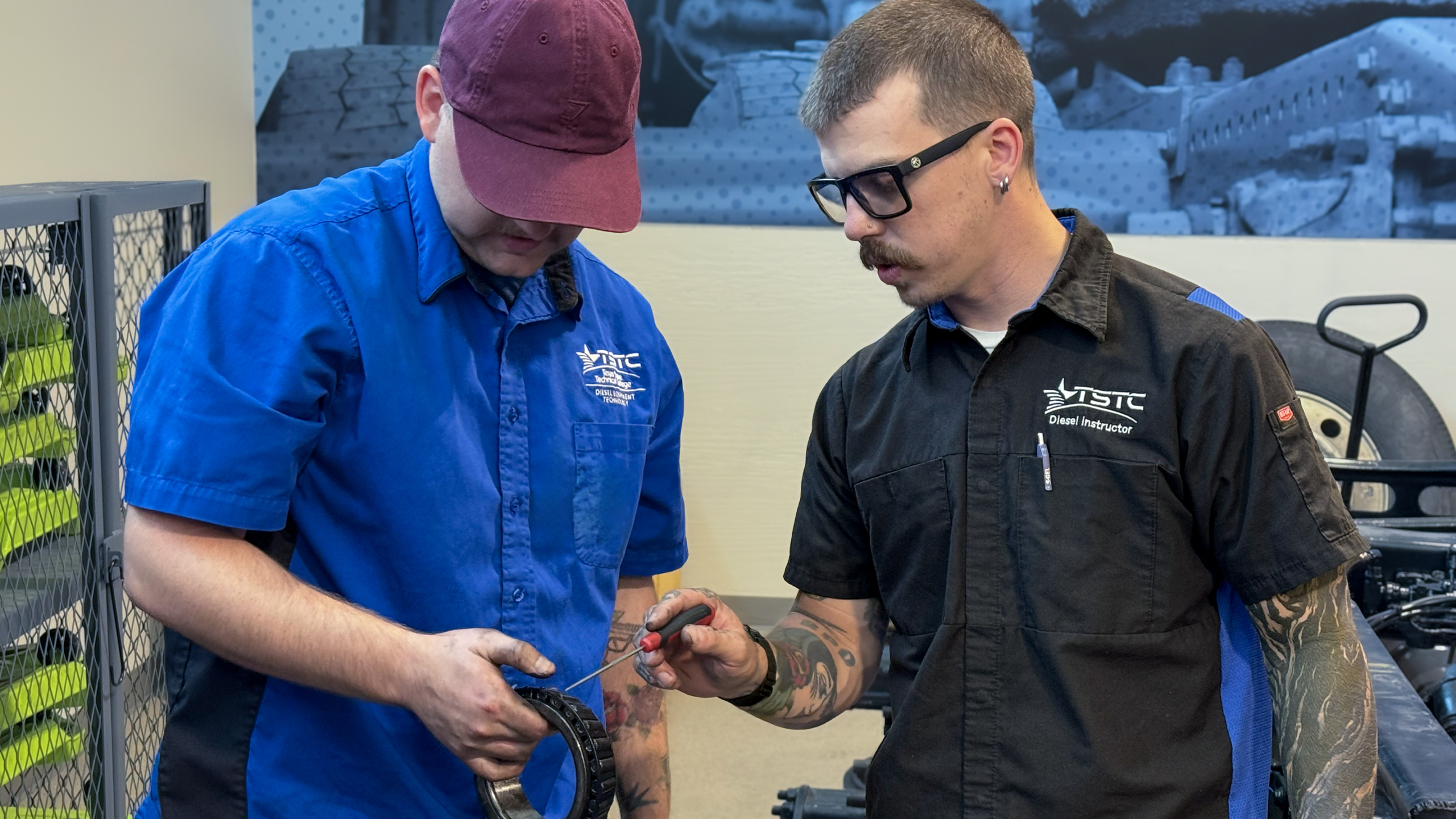
Cody: Because the industry doesn’t hand you a slide deck when a machine goes down. Students don’t come to TSTC to become experts at taking notes; they come to become professionals who can diagnose complex problems, communicate with customers, work under pressure and make sound decisions on the fly.
A traditional lecture can teach concepts, and concepts matter. But if all I do is stand at the front of the room clicking through slides, I’m preparing students for a test. I’m not preparing them for Tuesday morning when a customer is waiting, the equipment is acting up and the clock is ticking. When I run the class like an active service center, the student isn’t just memorizing procedures — they’re in the hot seat. They have to gather information, troubleshoot, explain their findings and stand behind their work.
TSTC: How do students handle that shift from passive listening to being on the spot?
Cody: Mistakes become instantly valuable. In a simulated environment, students can make decisions, experience real consequences, and learn from them without the financial or safety risks that exist in the real workplace. Confidence grows because it’s earned through practice, not because someone told them, “Trust me, you’ll be fine.” Employers tell us constantly that they can teach a new hire the specifics of a brand or software package — what they desperately need are people who can think critically, solve problems and adapt. So while I do ask my students, “Did you do the reading?” the far more important question is, “Can you do the job?”
TSTC: There are technical programs scattered all across the country. What makes the TSTC Diesel Equipment program at TSTC the benchmark?
Cody: The difference isn’t that we teach completely different laws of physics or engineering — those are universal. The difference is how relentlessly we focus on preparing students for the raw reality of the profession. From day one, students are expected to think and perform like working professionals. We don’t separate technical knowledge from workplace expectations. Technical competence, communication, troubleshooting, teamwork, accountability and customer service are baked into the exact same educational experience.
We also maintain an aggressive, real-time connection with industry leaders. Employers help shape our curriculum because they’re the ones hiring our graduates. That means our students are learning the technologies that are relevant today, not what was relevant a decade ago. High standards are not something we apologize for. We challenge students because the industry will challenge them. When employers actively seek out your graduates and trust the quality of your training, that’s when you know you’re setting the standard rather than just following one.
TSTC: Looking back at your journey — from earning a GED to teaching a collegiate technology program — what is the ultimate lesson you want your students to carry into the world?
Cody: That your starting point does not determine your destination. When people look at a resume or a title, they see the end result. They don’t see the setbacks, the wrong turns, the doubts, or the years of silent work in between. Success is rarely a straight line; it’s the product of persistence, adaptability and a willingness to keep moving when things don’t go according to plan.
I want my students to master the diagnostics and software, of course. But tools change. The specific tech they use today might be obsolete in 10 years. What lasts forever is the ability to learn. If students leave my classroom believing they can tackle a complex problem, teach themselves a new skill, and take ownership of their growth, then I’ve done my job.
Your career will be built less on what you know today and more on your willingness to keep learning tomorrow. Technical skills might get you hired, but character, integrity and adaptability are what sustain a career. Never let what you don’t know today stop you from becoming what you can be tomorrow. Show up, do the work, and the opportunities will follow.