

As AI changes technology careers, TSTC prepares students to adapt
Cybersecurity and Computer Networking Systems students are learning to work with emerging technology while building skills needed in a changing workforce.
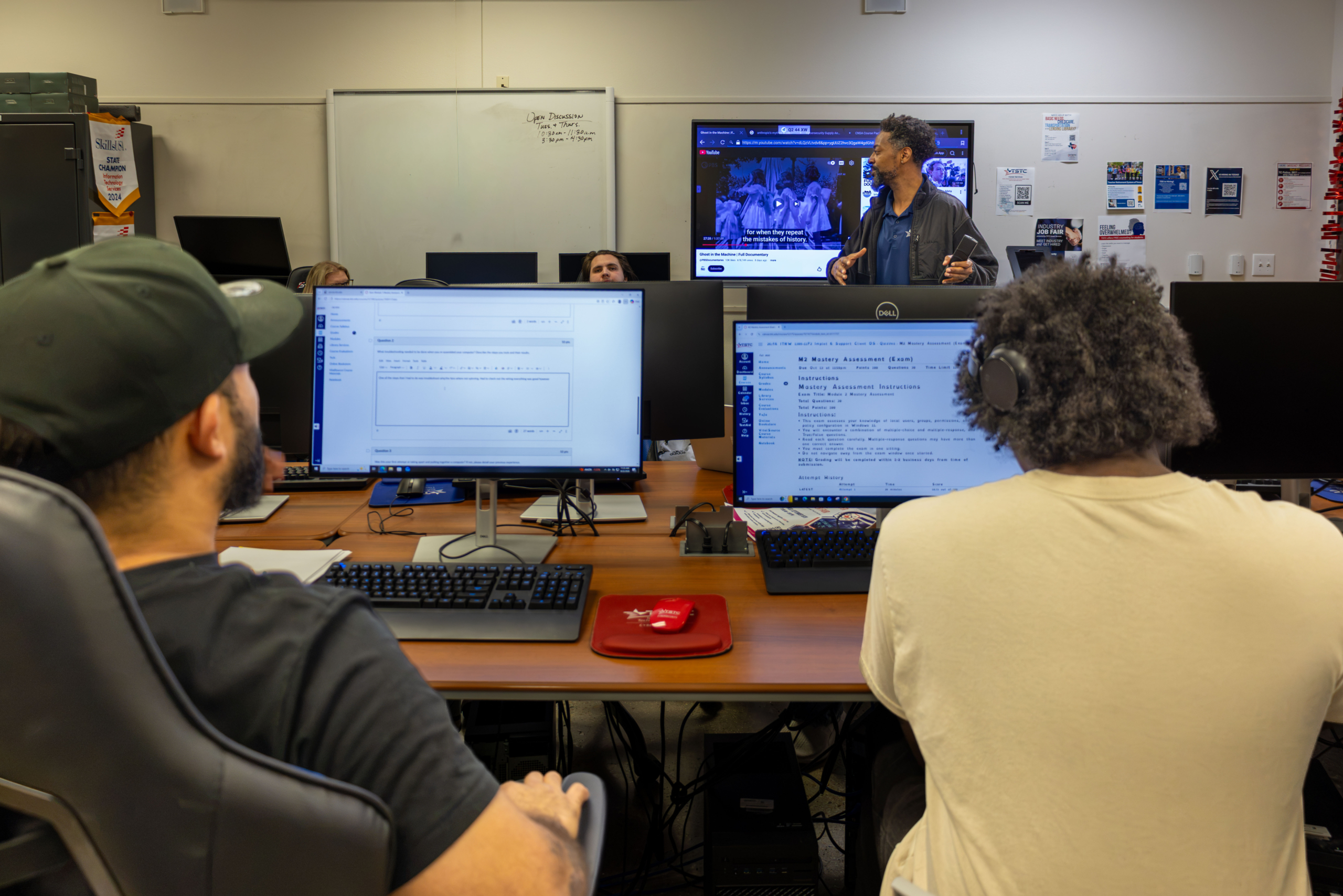
Artificial intelligence (AI) is changing how people work, and raising questions among students and parents about the future of careers in cybersecurity and computer networking.
From identifying online security threats to handling routine tasks, AI is becoming part of everyday work in the technology industry. But as these tools become more capable, the skills needed to use them are changing, too.
At Texas State Technical College, the Cybersecurity and Computer Networking Systems programs are preparing students for those changes by combining technical training with opportunities to use AI and other emerging technologies.
“AI is more likely to transform your job than replace it,” said Andrew Nash, TSTC’s program team lead for Cybersecurity and Computer Networking Systems. “It will automate your repetitive tasks, allowing you to focus on higher-level problem-solving.”
Nash shared an example from an industry partner where reviewing computer network activity once required five employees working for two weeks. After introducing an AI tool, the company completed the same work in a matter of hours.
The example shows how AI can handle time-consuming tasks, allowing employees to focus more on solving problems and making judgment calls.
Why technical knowledge still matters
Although AI can analyze information and suggest solutions, it doesn’t always get things right.
For example, AI might detect unusual activity on a company’s computer network. But a technician must determine whether it’s a minor technical problem or a possible cyberattack.
That requires an understanding of how computer systems work and outside, contextual information to make informed decisions.
“This degree teaches the fundamental principles of how every aspect of a network works,” Nash said. “Having this knowledge allows students to control and direct AI.”
Without those skills, technicians may struggle to recognize when AI provides incorrect information, potentially putting computer systems and sensitive information at risk.
Learning new skills alongside AI
As AI takes on more routine work, technology professionals are learning new ways to use it.
For example, AI can help explain what computer code does, saving technicians time. However, someone with technical knowledge still needs to check that explanation for accuracy.
Students are also learning how to give AI clear instructions to produce useful results, a skill known as prompt engineering.
But technical knowledge alone isn’t enough. Critical thinking, communication and good judgment are also important.
“Critical thinking,” said Christopher Love, a TSTC instructor, when asked what nontechnical skill students need most. “As AI generates more content, the ability to verify truth and identify bias becomes the most valuable skill in the industry.”
For TSTC Cybersecurity student Dvonte Hughes, AI represents an opportunity to work more efficiently and keep pace with a rapidly changing industry.
“I see it as a great tool to use,” Hughes said. He added that AI can help people brainstorm ideas, develop projects and complete work more quickly.
Hughes also recognized the importance of human involvement, pointing to the need for people to give AI direction in carrying out tasks.
Preparing students for a changing industry
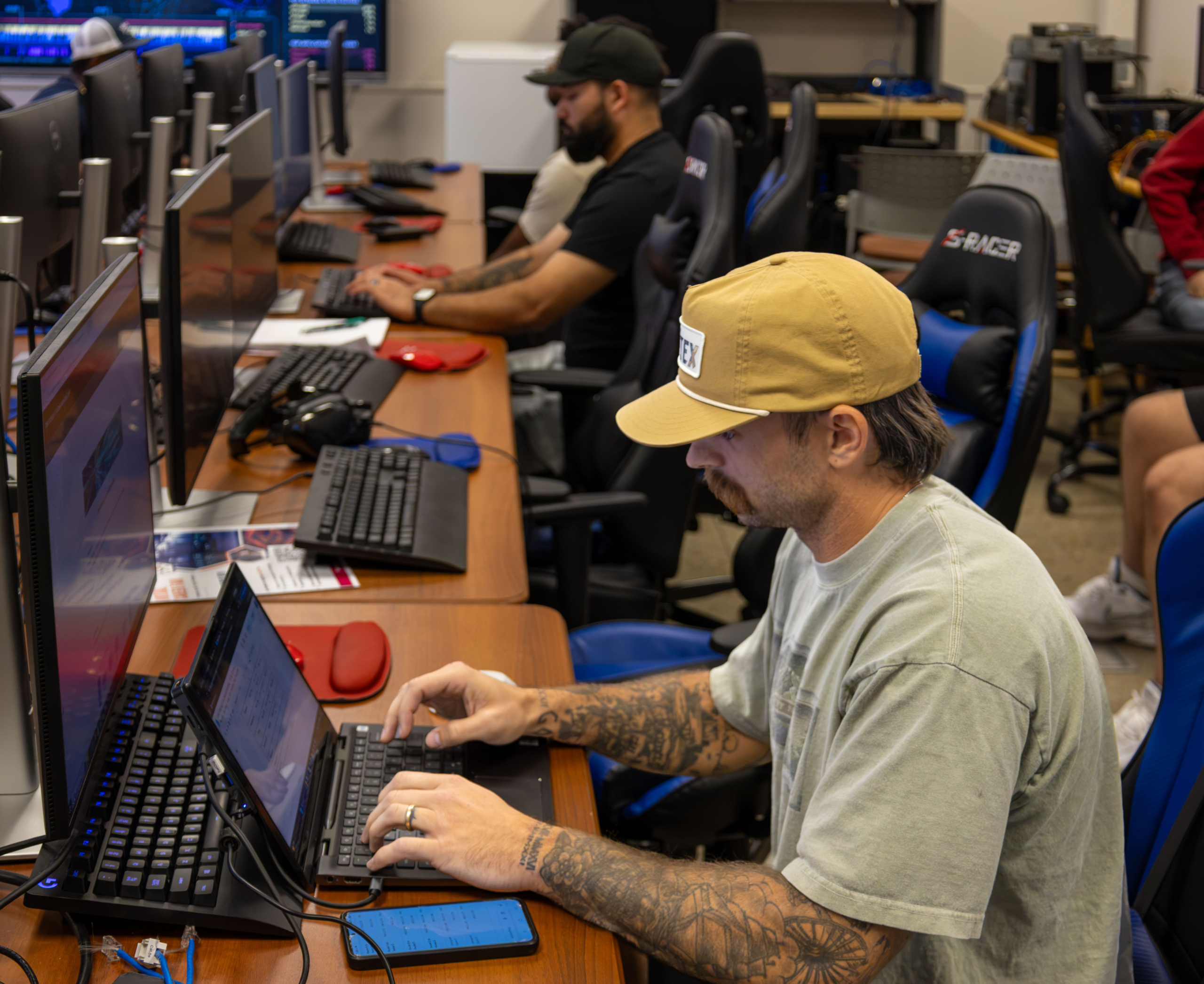
TSTC is incorporating AI into hands-on learning to help students prepare for the technology they’ll encounter in the workplace.
In one example, instructors developed an interactive, choose-your-own-adventure-style activity that lets students work through different computer problems in a simulated environment without risking damage to the college’s actual systems.
“We here at TSTC are creating labs and experiments to simulate what the students will see out in the field once they graduate,” Love said.
These exercises give students opportunities to practice using AI while developing the problem-solving skills needed to evaluate its recommendations.
Although AI is changing some traditional job responsibilities, it also allows technology professionals to accomplish more and focus on increasingly complex work.
At TSTC, the goal is to give students a strong foundation in cybersecurity and computer networking while preparing them to adapt as technology continues to change.
As AI becomes more common in the workplace, understanding how to use it and knowing when to question it will remain an important part of these careers.