

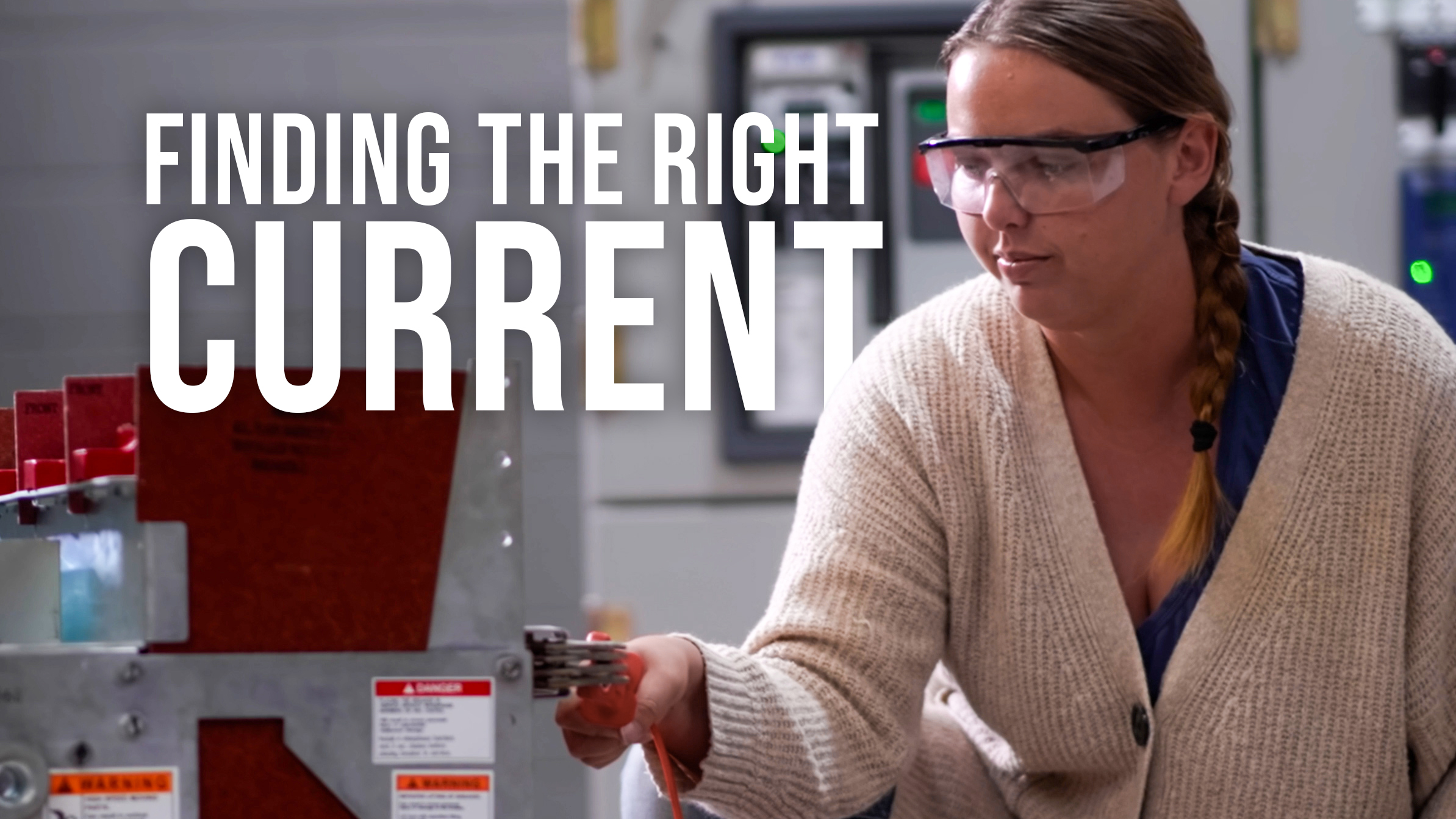
From Four-Year Degree to Two-Year Career: One Grad’s Detour to a Career She Loves
Recent Texas State Technical College graduate Payden Parsons doesn’t dread work anymore.
“It’s exciting to see the work I do in the office actually put into the field,” she smiled. “In my previous positions, I dreaded going to work and didn’t feel like I was doing what I was meant to do.”
Payden just walked the stage in August in Waco and earned an associate degree in TSTC’s Electrical Power and Controls (EPC) program. She’s already working at Oncor to design the systems that deliver power to homes and businesses in her hometown of Waco.
But Payden’s path to the present day wasn’t a straight line. It took a few detours, a reset, and the right connection in the form of a mentor to help her find where she belonged.
“At the end of high school, I felt pressured to take the traditional four-year route,” she said. “I felt extreme uncertainty. I was never a person who knew exactly what I wanted to do. I just knew I wanted to get a good job, support my hobbies and eventually have a family.”
She said that pressure came from her parents, school counselor, and from within. So she went to community college and then on to a four-year university, earning her degree in business administration with a minor in human resources.
That four-year degree seemed like the safest choice for her career. But something was missing.
“I was missing a strong mentor who could help lead me toward the best path for me to succeed,” Payden said, speaking about her university experience. “I didn’t feel like I was getting that there.”
She moved to Colorado and took her first post-graduate job working in human resources at a ski resort. Growing up in Texas, Payden loved outdoor activities like hunting, fishing and golf. She had a big passion for snowboarding, so she thought, “What better way to combine a hobby with what I earned my degree in?”
She was only making $14 an hour, however, and her one-bedroom apartment was $2,000 a month. Even with savings, she barely got by. It wasn’t sustainable to keep working and living there.
So she came back to Texas, and started working in accounting to get back on her feet, save money, and do what she thought she should be doing as a young adult. But she wasn’t happy and eventually, the feelings followed her home.
“The job was extremely depressing and lonely, and I didn’t have a passion for it. It started affecting my personal life,” Payden said. “I became very depressed; I didn’t want to do the things I loved, and I dreaded going to work every day.”
She already had the degree. What she needed was a career that gave her a reason to get up in the morning.
“I finally hit rock bottom with that job. I was so miserable that I knew I had to make a change, or the rest of my life was going to be like that,” Payden remembers. “I wanted to be happy and live a different life, so I made a plan.”
She saved enough to make an exit, and have three or four months to decide her next career move. Her plan? Get mentally healthy and soul-search for the answer to what would make her happy and fulfilled.
The breakthrough came over dinner.
Payden went to dinner at her best friend’s house. Curt Wade, who Payden says is “like a second father” to her, was there.
“He found out I hadn’t been working while I was figuring out what to do next,” Payden said. “He asked, ‘What are you going to do?’”
She didn’t have an answer then, but Wade saw promise for Payden in his own program. He’s the EPC program team lead at TSTC.
“I think she was looking for some guidance there on what she should do for her future,” said Wade. “I just laid out what we do, and it seemed to fit her pretty well.”
Wade knew EPC students were graduating into good-paying careers after two years. Because Payden had already completed many of her academic courses, he explained the transition would be easy.
He had another main point: she could potentially earn more with a five-semester technical degree than she had with her four-year degree. That conversation gave Payden something more important than a new career option. It gave her the guidance she had been searching for diligently.
“In the weeks before that dinner, I had really wanted to find a mentor who could guide me toward where I wanted to be,” Payden said. “That night, I felt like Curt stepped in and became that person for me.”
It’s what she always wanted in a four-year university, but didn’t get: a mentor. After years of trying to find the right direction, that conversation helped complete the circuit.
“I didn’t know I was being a mentor,” Wade laughed. “I asked my daughter, ‘You really think she’s gonna do this?’ She goes, ‘When [Payden] puts her mind to it, she’ll do it.’”
Payden enrolled at TSTC the following semester.
She was nervous about being older than some of the students and as a woman entering a male-dominated field. But she discovered other women in the program and quickly befriended them, and found shared interests with the men.
“She was older than the typical student,” Wade said. “They saw that she had had her degree already and established herself. So they looked up to her and asked her questions. She was definitely the mentor of her class.”
So Payden herself became the mentor in her newfound TSTC friend circle, helping others understand electrical design concepts and giving her peers support when needed.
“It’s like a big family. We’re excited to see each other every day, and they make coming to class fun,” she said. “Everyone wants the whole group to reach the finish line, so we support each other and catch each other up when someone has to miss class.”
She also jumped at the chance to get her foot in the door at Oncor, so she could learn more about the field she was headed into before she graduated.
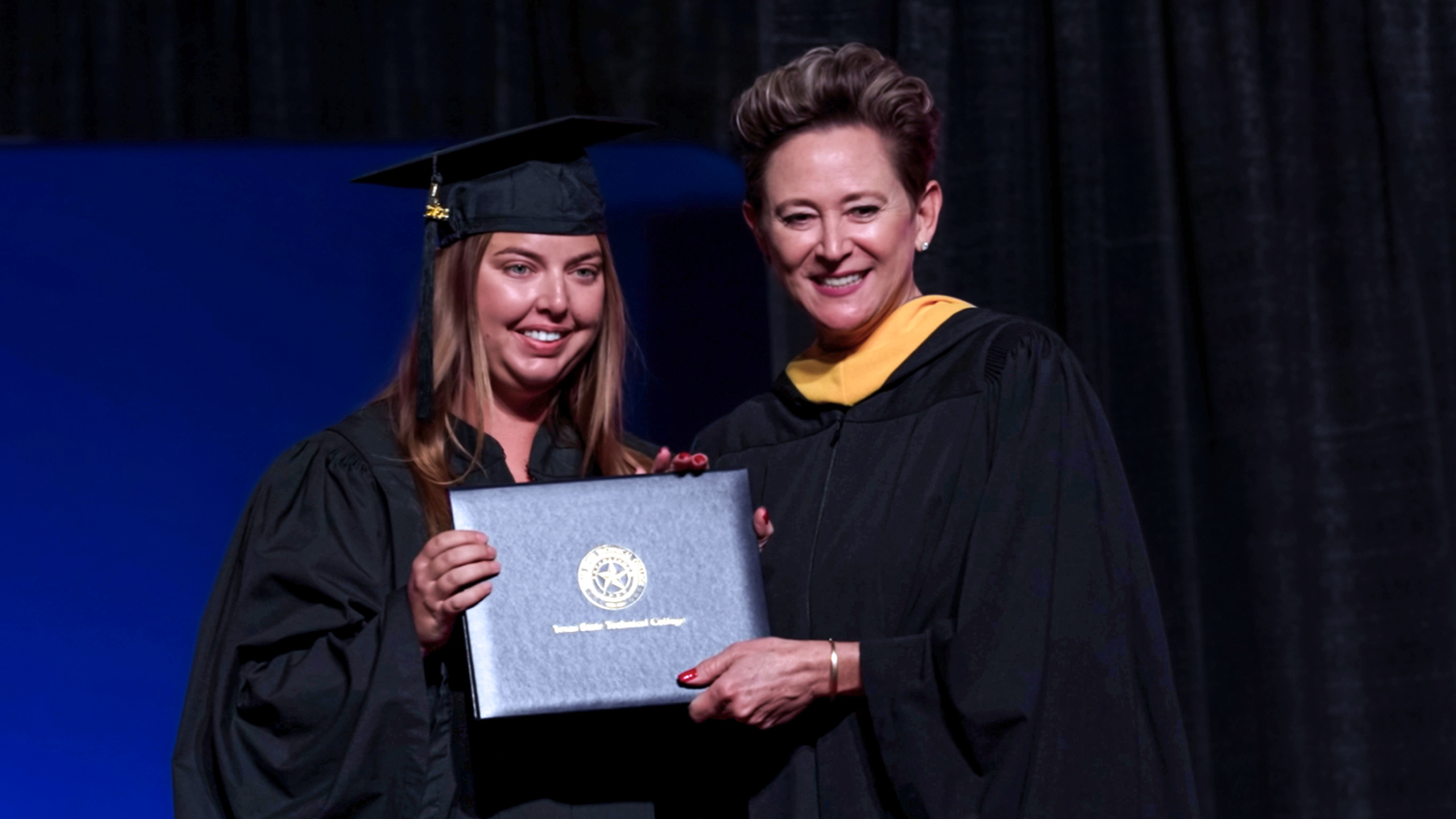
“Payden has been a great addition to Oncor, first as a part-time employee through the Work Study program we recently launched in partnership with TSTC, and now as a full-time employee following her recent graduation,” her supervisor, Jay Walthall, said. “She has demonstrated a tremendous work ethic, consistently taking on new challenges and meeting or exceeding expectations. Payden’s time at TSTC has clearly helped prepare her for a successful career at Oncor.”
Now, she’s earning about three times what she earned in Colorado, and has nearly doubled her salary as an accountant.
For Payden, however, the change means more than a bigger paycheck. It means discovering that changing direction did not mean she had failed, and that the path she chose at 18 did not have to determine the rest of her life.
“Now I’m excited to go to work, and I don’t mind staying a little later to finish a job,” she smiled. “It’s never too late to change your career path and make a better life for yourself.”
Watch accompanying Feature Video