

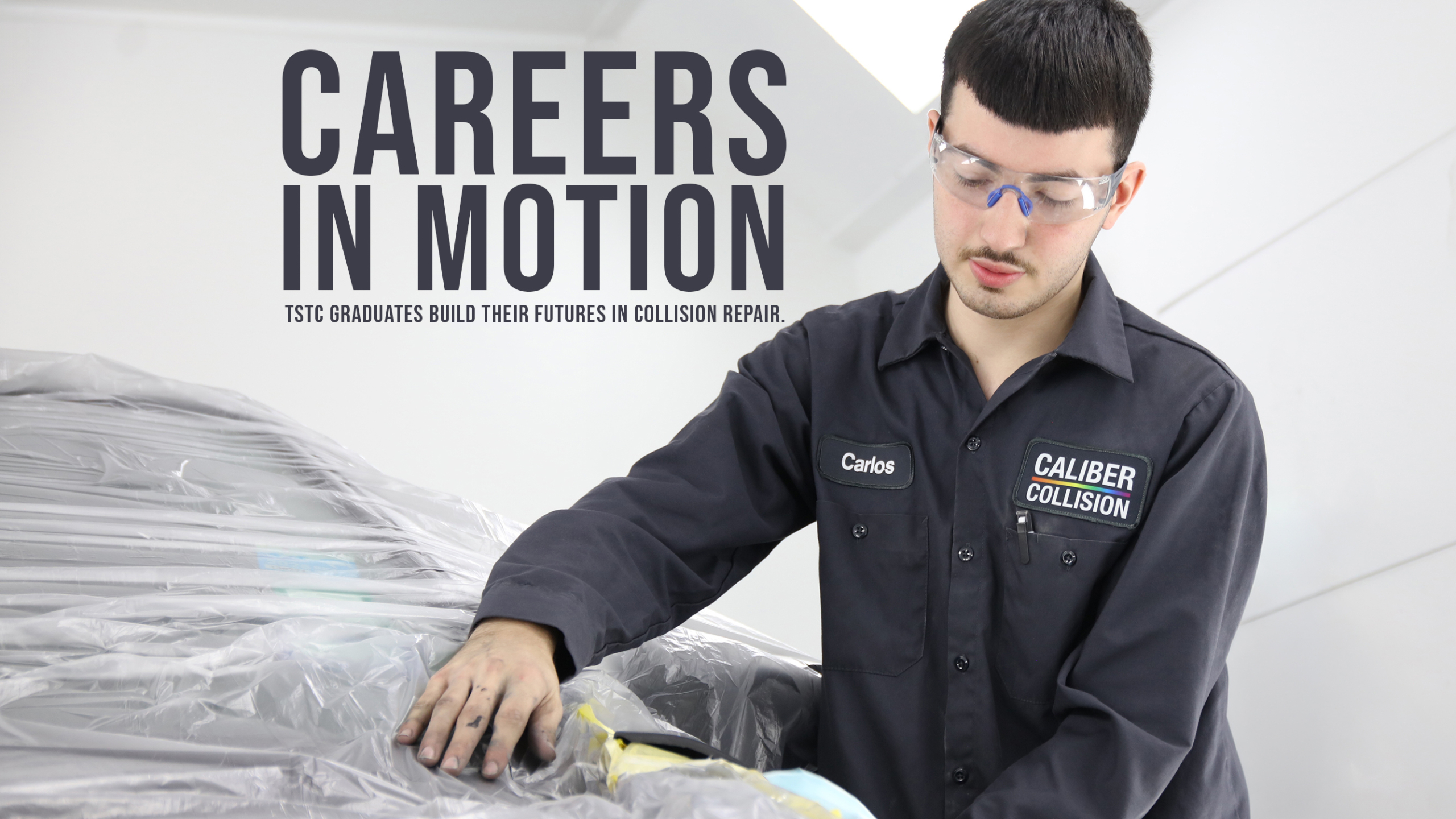
TSTC Graduates Find Opportunity at Every Turn in Collision Repair
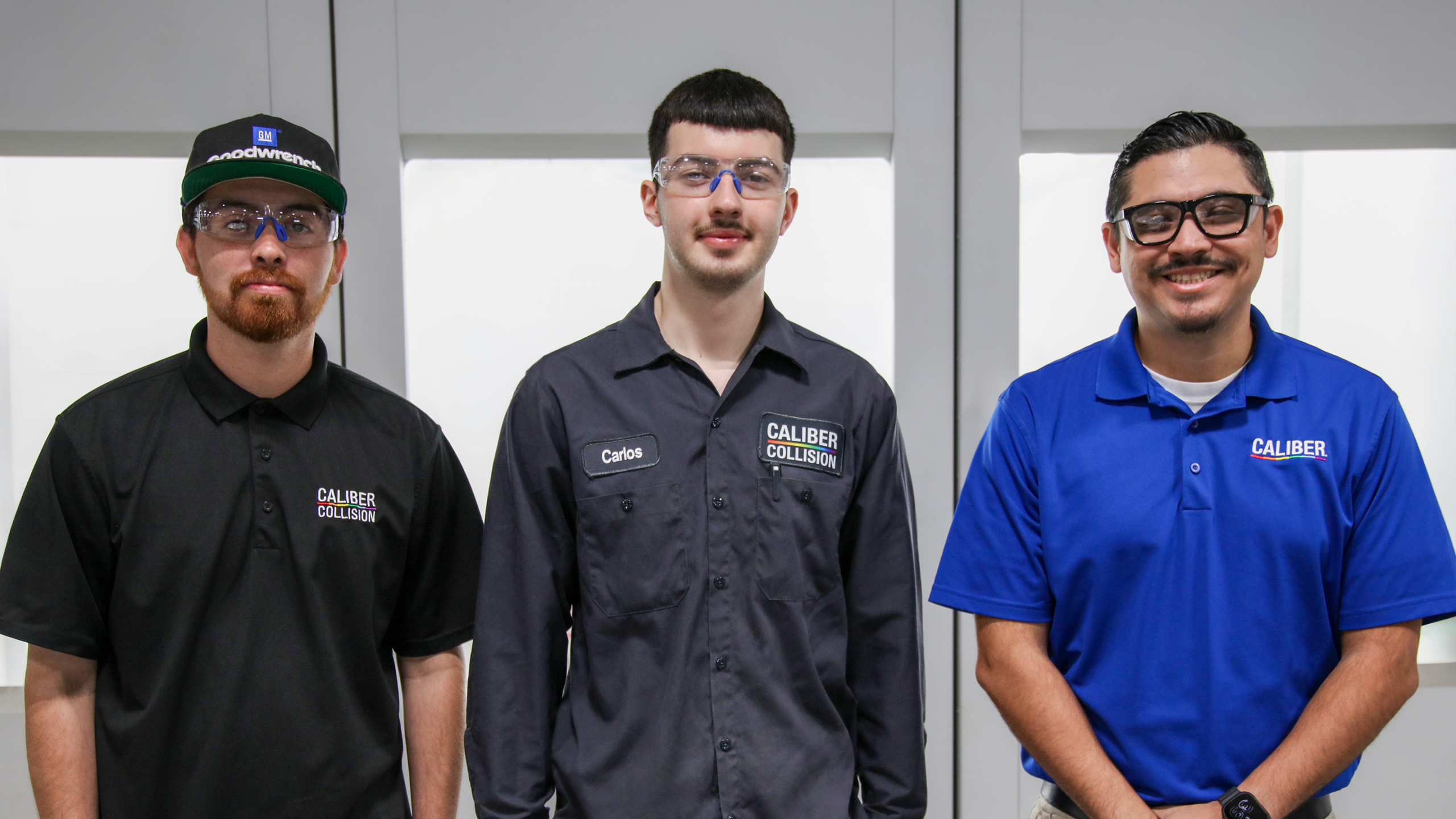
Harlingen campus alumni Philip Saldana, Carlos Garza and Roman Andablo are advancing their careers at Caliber Collision while helping meet the demands of an industry transformed by technology.
A damaged vehicle entering a collision repair facility represents more than another repair job. Behind every replacement bumper, refinished panel and carefully inspected component are skilled professionals whose technical expertise plays a critical role in restoring vehicles safely and efficiently.
At Caliber Collision, three graduates of Texas State Technical College in Harlingen are putting those skills to work while advancing their careers.
Philip Saldana, Carlos Garza and Roman Andablo followed different paths into the collision repair industry, but their journeys share a common foundation: the technical education and hands-on experience they gained at TSTC.
Saldana earned an associate degree in Auto Body Repair and Management in 2018 and now manages Caliber Collision’s Harlingen location. Garza earned a certificate in Auto Collision Refinishing earlier this year and works as a paint apprentice. Andablo, who earned a certificate in Auto Collision Refinishing in 2023, has advanced through several roles and now works as a parts specialist.
Together, their experiences demonstrate the range of career opportunities available in collision repair and how a technical education can provide a foundation for continued professional growth.
Opening Doors for the Next Generation
For Philip, the collision repair industry has provided opportunities for professional growth and the chance to help others establish their careers.
His introduction to the industry began with a willingness to start wherever an opportunity arose.
“I came in and asked to sweep their floors just to get my foot in the door,” Philip said. “Once I got my foot in the door, it opened up different career paths.”
Today, he recognizes that same potential in graduates entering the industry.
Finding qualified technicians remains a challenge, and employers need individuals who understand that building a successful career requires patience, dedication and a willingness to learn.
“I can provide the tools, the training and everything else to get you where you need to be,” Philip said. “You need to have the right mindset, and I want to pay it forward.”
Learning the Craft, One Panel at a Time
For Carlos, an interest in automobiles grew from his family’s enthusiasm for vehicles. While several relatives pursued careers as mechanics, he wanted to explore a different side of the automotive industry.
After completing four years of collision repair coursework in high school, he continued developing his skills at TSTC.
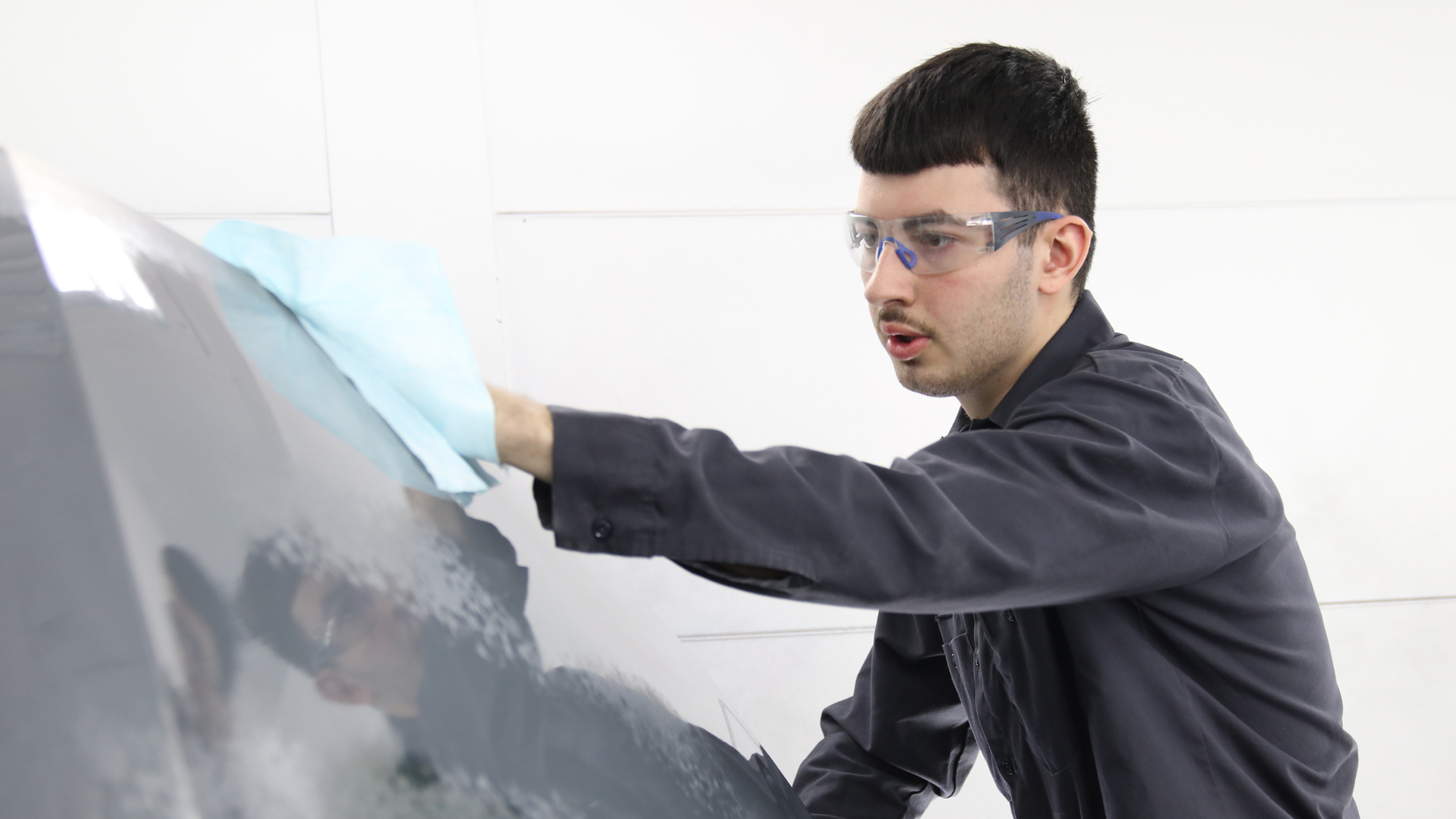
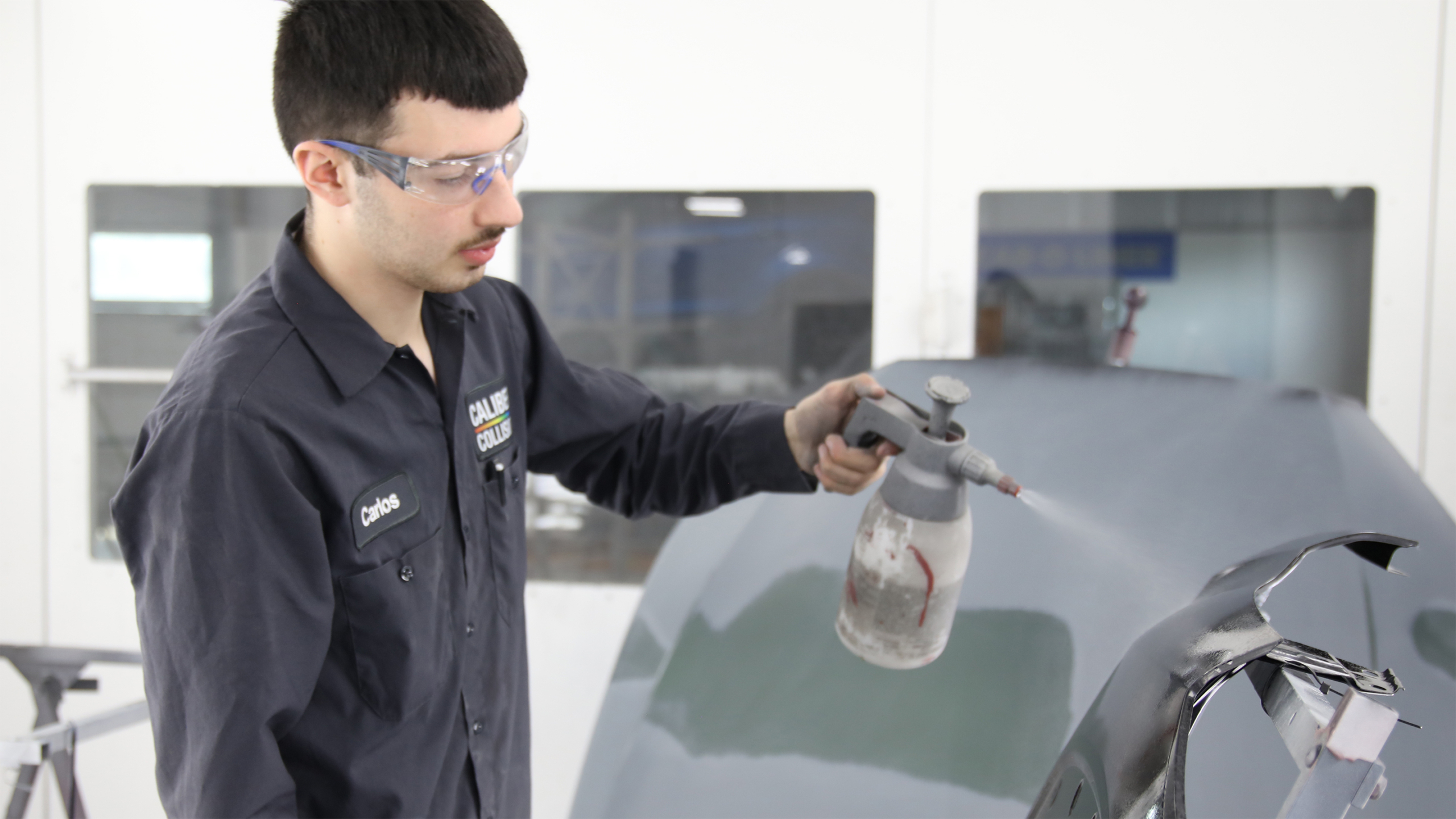
Hands-on instruction reinforced his career choice as he gained experience in surface preparation, masking, cleaning, sanding and paint application.
Now a paint apprentice, Carlos puts those skills to work while learning the production methods and expectations of a professional collision repair facility. His responsibilities include preparing damaged panels, applying primer, sanding surfaces and ensuring vehicles are ready for painting.
One of his biggest adjustments has been learning to adapt to the techniques of experienced technicians. Advancements in technology have also created new learning opportunities.
At TSTC, Carlos trained using the AkzoNobel paint mixing system. At Caliber Collision, he is gaining additional experience with the Axalta paint system, which provides detailed information about materials and mixing ratios to support precision and consistent results.
As he continues refining his skills, Carlos has his sights set on the next step in his career.
“I want to become a professional painter for Caliber Collision,” Carlos said.
The Right Part Makes All the Difference
While Carlos focuses on refinishing, Roman works behind the scenes to keep repairs on track.
His career at Caliber Collision began when he visited the facility to inquire about employment opportunities. Although his preferred position was unavailable, he accepted a job as a detailer.
After two to three months, he transitioned into vehicle preparation, where he worked for a year and a half before moving into the parts department. Now a parts specialist, Roman plays an important role in ensuring technicians have the correct replacement components to complete repairs safely and efficiently.
His responsibilities include ordering parts, inspecting deliveries, comparing replacement components with damaged originals and communicating with technicians about availability.
As vehicles become more technologically advanced, accuracy in parts selection is increasingly important. Different trim levels, safety features and equipment packages often require specific components. Roman relies on vehicle identification numbers to verify that replacement parts match each vehicle’s specifications.
He also checks details such as sensor openings in bumpers to ensure replacement components are compatible with the vehicle’s original configuration.
“If it is not correct, our calibrations will not program it, and your sensors will be off,” Roman said.
Even a minor ordering error can delay an entire repair. To avoid setbacks, Roman communicates with technicians through group messages, monitors deliveries and follows up on missing components.
Looking ahead, he hopes to continue advancing his career by becoming a service advisor at Caliber Collision.
Repairing More Than Metal
The work at Caliber Collision reflects a broader transformation across the collision repair industry.
Today’s vehicles are equipped with advanced driver-assistance systems, cameras, parking sensors, blind-spot monitoring technology and other electronic components that make repairs increasingly complex.
To keep pace with these advancements, Caliber Collision emphasizes ongoing professional development, including annual training and instruction through I-CAR, an organization that provides collision repair education and industry-recognized training.
For Philip, staying current with evolving technology is essential to ensuring repair quality, maintaining safety and earning customer confidence.
The demand for skilled professionals also reflects the industry’s continued growth. According to Texas Career Check and O*NET OnLine, employment for automotive body and related repairers in Texas is projected to increase 10% between 2024 and 2034, adding 1,475 jobs.
Turning Technical Education Into Opportunity
Students in TSTC’s Auto Collision and Management program develop the technical skills, precision and attention to detail needed to repair modern vehicles safely. Through hands-on labs and manufacturer-guided repair practices, they gain experience that reflects evolving vehicle technology and industry expectations.
By aligning instruction with the needs of employers, TSTC prepares students to enter a changing industry with the skills and confidence to pursue meaningful careers.
Jose Vasquez, TSTC’s Auto Collision and Management program team lead, said the career progression of former students demonstrates the value of that preparation.
“Our instructors ensure students master the precise standards needed to repair vehicles safely and return them to factory specifications,” Vasquez said.