

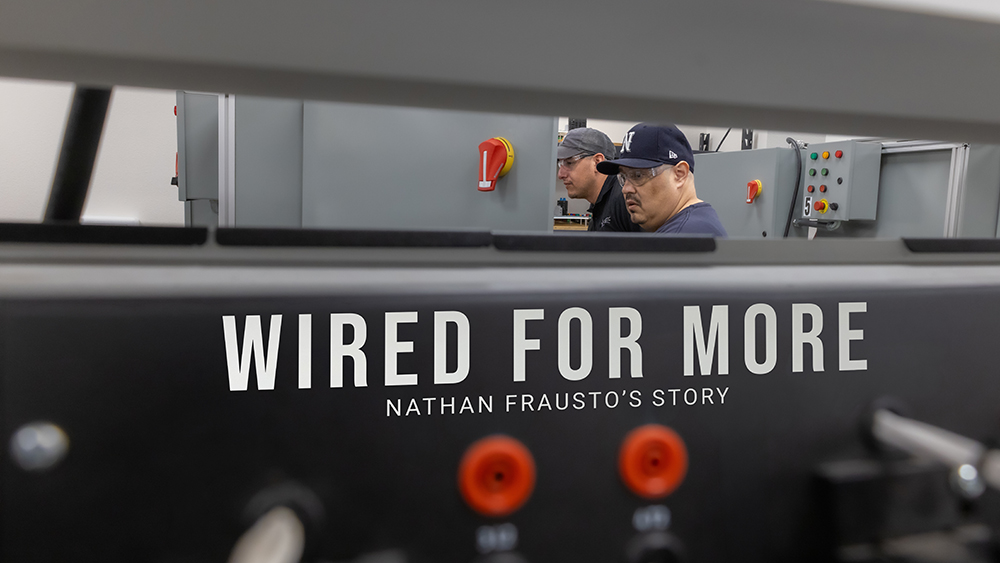
Wired for More
After years of mechanical work across multiple industries, Nathan Frausto realized he needed new technical skills to keep pace with a changing workforce. That realization led him to Texas State Technical College’s Industrial Maintenance program, where he is building the electrical knowledge he once lacked and preparing for a more technical future.
Nathan Frausto opened the panel and studied the electrical board in front of him. He traced wires, searched for answers and tried to make sense of the problem on his own. After a few moments, he had to admit what he already suspected: he did not know enough to fix it. So he picked up the phone and called the support line.
He had spent about a year at Cargill as a maintenance technician, building on a work history filled with mechanical experience. But this moment exposed a gap he could no longer ignore. The industry was changing, and Nathan understood that mechanical skill alone would not carry him forever.
He never wanted to feel that helpless again. He knew it was time to make a change.
Family, Fixes and Foundation
Before Nathan even graduated from high school, he was already working in his grandfather’s body shop doing automotive paint and restoration. Surrounded by the high-pitched whine of tools and the grind of metalwork, he started building the mechanical instincts that would stay with him for years.
“What I learned most was how to get a feel for the different materials I was working with,” he said. “Aluminum, metal, the different bolts.”
It was his first real opportunity to develop hands-on mechanical skills, but the work also came with mistakes. Working closely with his grandfather, whom he compared to the All in the Family character Archie Bunker, and his uncles, he quickly learned they would not hesitate to correct him.
“I got honesty every time,” he said.
He vividly remembered one mistake in particular. He was repairing a damaged truck door for Southwestern Bell when he rushed to put a bolt back in place. Instead of threading correctly, the bolt went in crooked and stayed loose.
The mistake cost him time and introduced him to a tap-and-die set for the first time. With help from his uncle, he fixed the problem, but the experience stayed with him. It taught him to slow down, trust the feel of the work and understand that doing a job too quickly often means doing it twice.
“That was kind of like a foundation, and I use it every time I can,” he said.
The body shop also showed Nathan how rewarding it could be to take something damaged and see it through to completion. Restoring torn-up vehicles gave him an early sense of pride in his work. Just as importantly, it helped him realize he was capable of more than he had imagined.
Shifts, Skills and Setbacks
The body shop was only the beginning. In the years that followed, Nathan moved through a wide range of jobs and even helped launch a business of his own, collecting experience across industries along the way.
At Applied Materials, he worked at a fast pace, building tools and chambers to exact specifications. Later, at Cargill, his mechanical background remained valuable as he handled preventative maintenance and worked on motors for conveyor belts and fans.
But the job also exposed a weakness he could no longer ignore.
“Everything is moving to automation,” he said.
As the industry changed, Nathan realized mechanical skill alone would not be enough to carry him forward.
“The mechanical background that once took me far for decades is not going to take me to the same place anymore,” he said. “So it’s essential that I learn electrical.”
That realization became even clearer when he moved to the second shift after staffing changes. With fewer people around and more calls to handle on his own, he found himself facing electrical problems he was not yet prepared to solve.
About a year into his time at Cargill, Nathan decided to pivot again and take a job that better matched his existing skill set. He moved to a data center, where the work fit more naturally with the mechanical skills he had already spent years building. But even there, he realized he wanted more than a job built mostly on labor. He wanted the technical knowledge to match the experience he had spent decades building.
“I feel like I’m overqualified for this job,” he said.
Then he noticed younger workers at the data center wearing Texas State Technical College hats. They were already in the kind of roles he wanted for himself. The seed had been planted.
Circuits, Confidence and Change
Nathan realized his skills, along with his desire to move beyond hard labor, no longer matched where the industry was headed. Time and again, the jobs he wanted listed the same requirement: a technical degree or certificate.
“I wanted to be better, and I never wanted to be in a position again where I couldn’t figure it out myself,” he said.
After noticing young workers at the data center wearing TSTC hats, he started researching the college. Nathan realized industrial maintenance was the route he wanted to take into a more technical career. He studied the program and decided to tour TSTC’s Williamson County campus. Despite some hesitation, it did not take long for him to make up his mind.
The shop, the tools and the hands-on nature of the program felt familiar. Instead of stepping into something completely unknown, Nathan saw a chance to build on his skills.
“I was like, man, I’m tired, I worked all day, hope it’s not long,” he said. “Then we kind of got into it. We were downstairs looking at tools, seeing the shop, and I was like, hey, I’m familiar with this. I’m familiar with that.”
Even after realizing he could succeed at TSTC, Nathan wrestled with the idea of being 46 and going back to school. At first, he thought he would be navigating the experience alone.
Albert Martinez, one of Nathan’s instructors, said Nathan’s background has become an asset in the classroom.
“He brings a lot of experience with him. He shares that experience with his fellow students,” Martinez said.
“When I was 18 or 19, I was spending time with people my own age, so I figured I’d probably keep to myself,” Nathan said. “But they’ve been really cool. We have a group chat, and we work together.”
Martinez said Nathan’s curiosity has also stood out.
“He asks a lot of questions to ensure he understands everything and how it applies to what he will see in the future,” Martinez said.
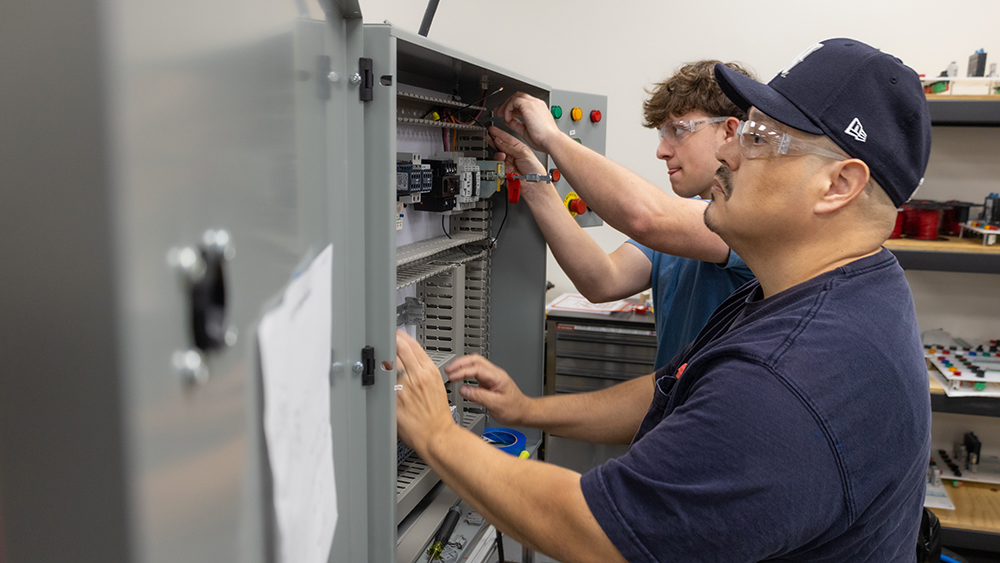
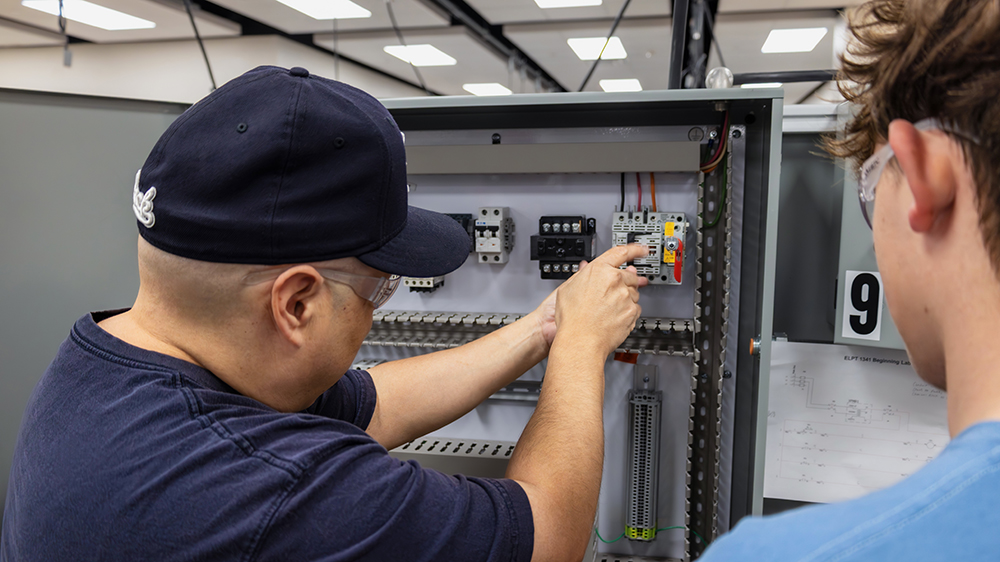
That sense of uncertainty has gradually been replaced by confidence in the classroom. His past experience building and wiring equipment has helped him feel more confident working on trainers in the lab, and he has started to build a stronger understanding of the symbols and systems behind the work.
“It was reassuring because at the end of the semester we’re going to have an exam where we’re going to troubleshoot that panel, and I’ve thought about that when I go to sleep for sure,” he said.
Nathan plans to graduate in fall 2026. After that, he hopes to build a future in the tech field, whether with a company like Samsung or at a data center as a maintenance technician. But more than a job title, he knows what kind of environment he wants next.
“I’ve worked for good teams and I’ve worked with not-so-good teams,” he said. “That’s where I just want to be, part of a good team.”
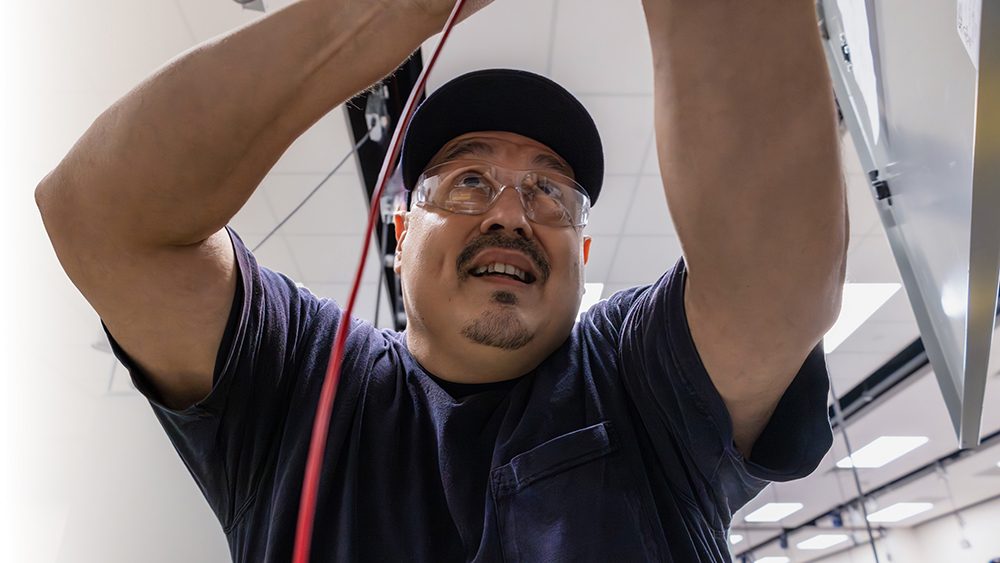
Now, instead of standing in front of an electrical panel searching for answers, Nathan is building the skills to become part of the solution.