

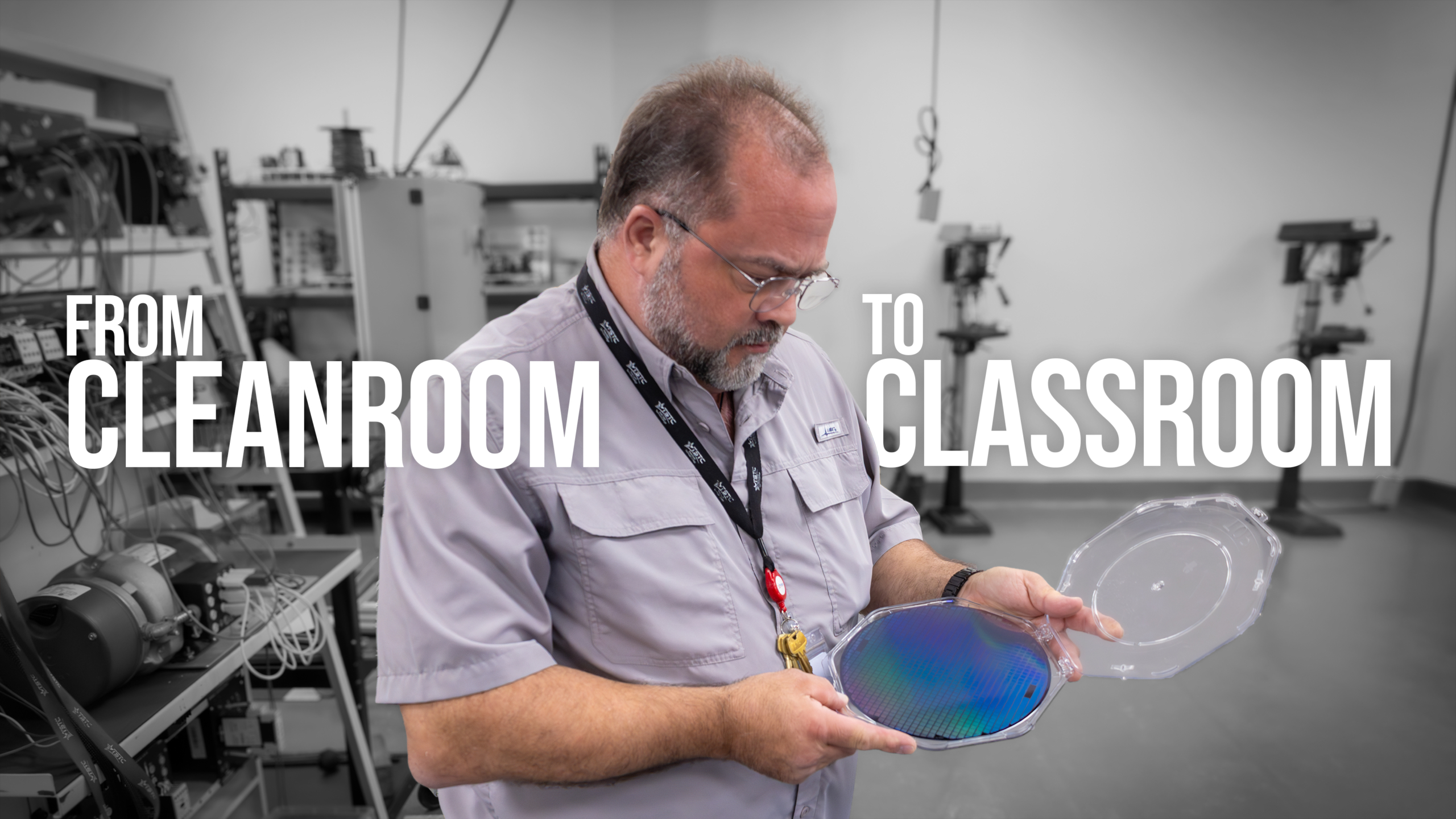
How a Can of Air Shaped the Next Generation of Chip Workers
Alarms blared throughout the fabrication plant as workers evacuated the facility. Daryle Miller started piecing together what had gone wrong. His team followed strict chemical safety rules, so the source of the problem should not have been there at all. It turned out to be something far more ordinary than anyone expected.
Trying to keep his workspace clean, Daryle had used a can of compressed air on a keyboard.
“I was cleaning a keyboard, a couple squirts, and suddenly alarms are going off,” Daryle said.
From Fabs to Future
Daryle is a 30-year semiconductor veteran who has spent decades working in environments where even the smallest adjustment can have massive consequences. Over those years, he worked for multiple companies and saw firsthand how volatile the industry could be. Early in his career, the semiconductor industry was often boom or bust, but that has shifted as electronics have become essential to everyday life.
“Not so much anymore,” Daryle said. “Chips are needed.”
His work touched products people rely on every day, from LED lights to the memory inside a cellphone.
“Even your airbag deployment has sensors, inertial sensors that determine the impact,” Daryle said. “That’s a semiconductor that makes the airbag go off.”
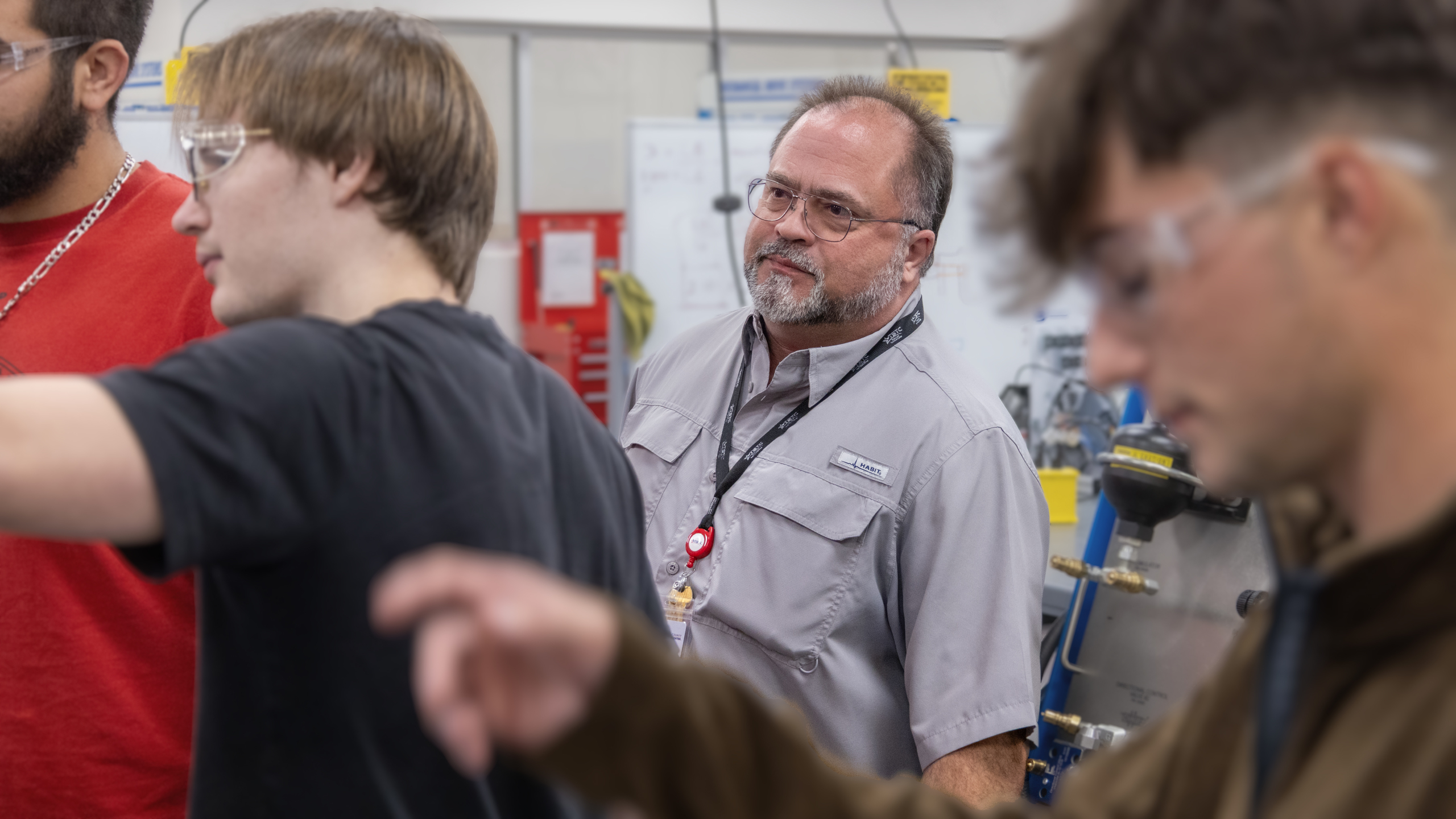
After three decades in the industry, Daryle now wants to bring that experience into the classroom and help prepare the next generation of semiconductor workers. He is helping shape structured and real-world curriculum at Texas State Technical College in Williamson County, grounded in the kind of work students will face on the job.
“I’ve had instructors who were basically reading it from a PowerPoint slide,” Daryle said. “They’d learned it from a book and I came away from the training with questions that were never answered.”
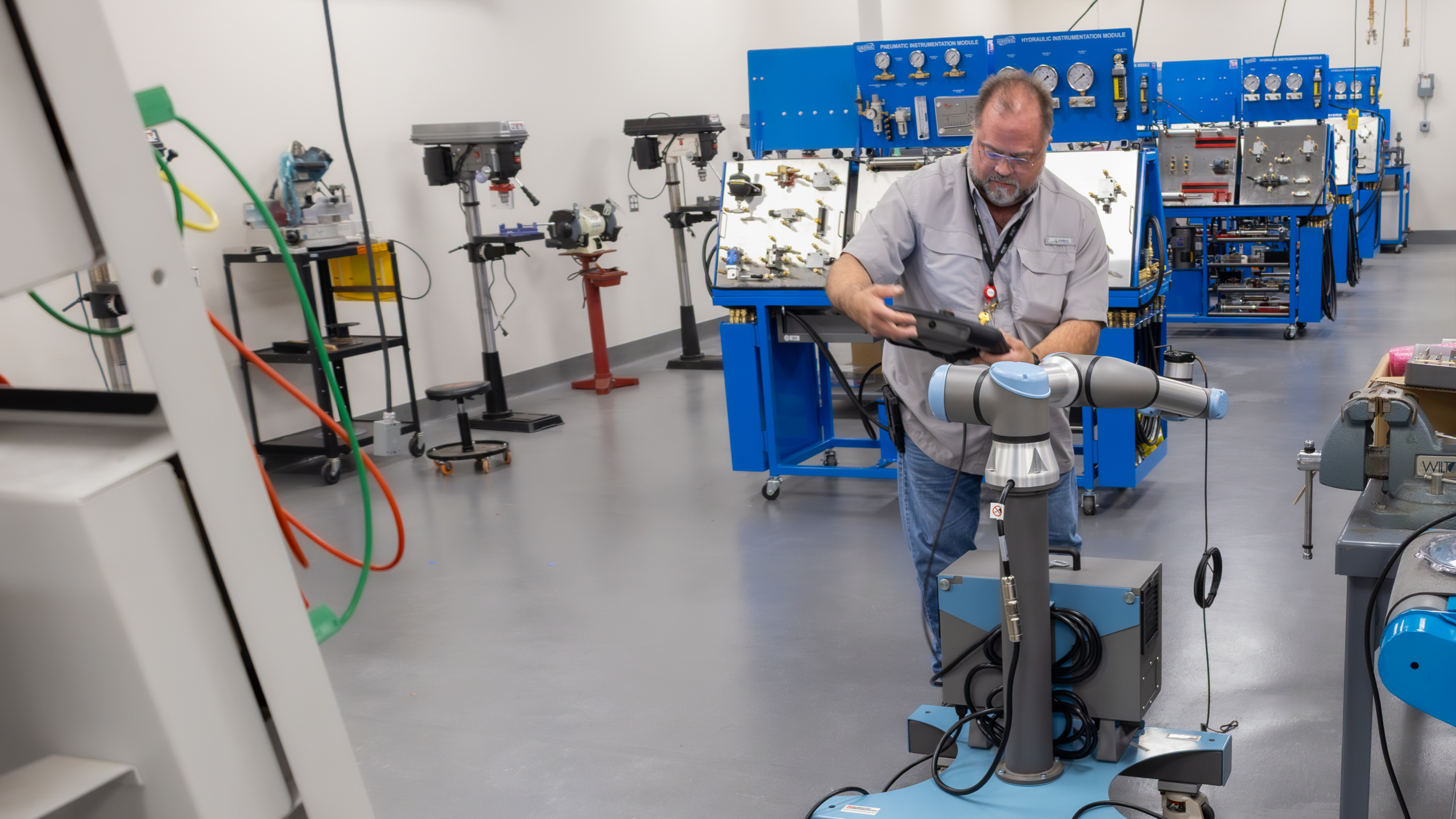
While Daryle will use slides to introduce core concepts, the cornerstone of the program will be hands-on learning with real equipment. Students will have the opportunity to work through challenges in a cleanroom and gain experience with the 200-millimeter and 300-millimeter wafers used across the industry.
Real Skills, Real Jobs
The demand for semiconductor workers is growing across Texas. The Office of the Texas Governor says Texas is the top state for semiconductor manufacturing, has led the nation in semiconductor exports for 14 consecutive years and employs more than 51,500 people in the industry.
That growth is creating opportunities for students to train for jobs in a fast-growing field close to home. Industry giants are already taking notice of the state’s expanding manufacturing ecosystem, noting an urgent need for skilled technicians who can hit the ground running.
Representatives from Applied Materials, in Austin, Texas, a global leader in materials engineering solutions for the chip industry, emphasize that local programs like TSTC’s are vital to filling this gap by providing hands-on, workforce-ready training that enables students to quickly transition into high-demand roles. When scouting for new manufacturing technicians, the company looks for candidates with strong foundations in automation, robotics, electromechanical systems and basic semiconductor fabrication processes.
As the industry grows, Daryle believes students need more than textbook knowledge to keep up with that specific employer demand.
“Other programs are just teaching theory,” Daryle said. “This is going to be hands-on, structured, real-world, real equipment.”
Students will learn through repairs, maintenance and troubleshooting on the identical machinery found on modern manufacturing floors. The program helps students develop the precise skills Applied Materials highlights—such as PLC troubleshooting, industrial sensor maintenance and strict cleanroom practices—ensuring graduates enter the workforce ready to solve problems, execute routine services and handle corrective maintenance when issues arise.
Graduates will be prepared for entry-level equipment technician roles, with room to grow into more advanced positions over time. In those entry-level roles, they may troubleshoot equipment, perform preventive maintenance and shadow a senior technician or equipment engineer.
“The semiconductor industry offers exciting careers at the forefront of innovation with high-growth potential,” Applied Materials noted in a statement of advice for incoming students, adding that those with strong technical training can quickly build long-term, impactful careers in a critical global industry.
According to the U.S. Bureau of Labor Statistics, semiconductor processing technicians earned a median hourly wage of $24.60 in 2024, with opportunities for higher pay as workers gain experience and complete in-house certification.
“With the knowledge they’re going to come out of here with, they’ll be able to do a lot of the job function from day one,” Daryle said.
Demand and Direction
As artificial intelligence expands and electronics become even more central to everyday life, demand for semiconductors continues to grow. In central Texas, companies such as Samsung are expanding their semiconductor footprint through projects in Austin and Taylor, creating demand for the skilled workers needed to keep those facilities running.
For local leaders watching construction cranes reshape the rural landscape, the stakes could not be higher. Ben White, chief executive officer of the Taylor Economic Development Corporation, emphasizes that building a regional workforce pipeline is absolutely critical to keeping pace with that corporate growth.
“From an economic development perspective, having a local pipeline of day-one ready technicians is a major competitive advantage for the Taylor region,” White noted. “Companies in the semiconductor industry need highly skilled talent that can contribute immediately, and a strong local workforce pipeline helps attract new investment, support business expansion and strengthen the long-term competitiveness of our regional economy.”
White points out that the arrival of this program does more than just support massive manufacturers, it directly impacts local residents who want a clear path into the tech sector.
“This program gives people the opportunity to gain in-demand skills, access quality jobs in the semiconductor industry and build long-term careers without having to leave the community,” White said.
This localized talent pipeline arrives at a pivotal moment. According to the Semiconductor Industry Association, the industry is not only expanding, with an estimated 115,000 new semiconductor jobs expected in the U.S. by 2030, but it is also facing a massive generational shift. Census data shows that in 2022, 52.1 percent of workers in electronic component and product manufacturing were 45 and older, underscoring the immediate need to prepare the next generation for highly technical roles.
“The new generation of technicians and engineers coming in, they don’t have the experience,” Daryle warned.
He has seen firsthand exactly how much precision that experience demands. During six years spent working on a single manufacturing tool, Daryle encountered a baffling defect that made the silicon wafers look as if a bulldozer had scraped across the surface—rendering them completely useless and costing the company money every time the machine ran.
After multiple tests, he traced the catastrophic issue to radio frequency interference and a microscopic particle smaller than a human hair.
It is precisely this gap between textbook theory and microscopic reality that TSTC’s Advanced Manufacturing-Semiconductor program aims to close. By troubleshooting the complex, multi-million-dollar tools used in the field, students gain a strong foundation before ever stepping foot onto a corporate payroll.
Daryle plans to bring those hard-earned lessons into the classroom, teaching the next generation that anything—even something smaller than a human hair or as simple as a can of air—can be the difference between a successful product and millions of dollars in damaged inventory.
“Everything you do has an effect in that fab, in that clean room,” Daryle said.
The alarms in Daryle’s old fab may have stopped long ago, but the lesson remains: in an industry where a single stray breath or a squirt of air can derail millions of dollars of technology, the ultimate competitive advantage isn’t just the machinery, it’s the people trained to master it.