A Conversation with Toby Styron
Building technicians who shine in any environment
When you see the Resistol hat coming your way, you know you can feel the energy coming from the person underneath it.
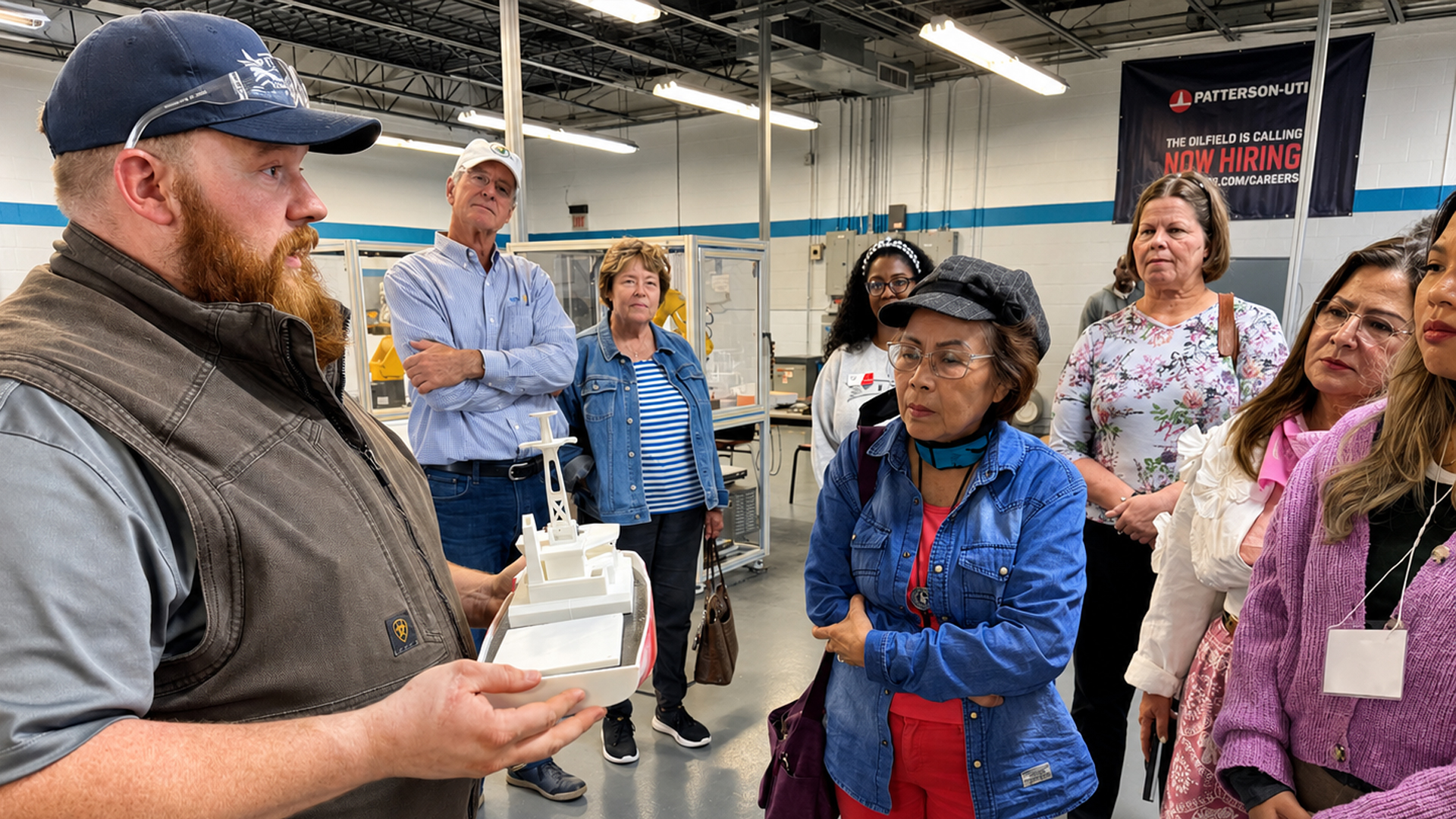
Toby Styron wants to see those he is mentoring succeed, no matter where it leads. It shows on a board in his lab. Toby has 3D printed plaques of graduates and where they are employed – everywhere from a family-owned farm to Texas Instruments.
For Toby, success is not only measured in job placement, but knowledge. He strives to make sure students are ready for any challenge.
He should know because it was not that long ago that he was sitting at the same lab tables at Texas State Technical College’s Advanced Manufacturing – Automation & Robotics lab in Sweetwater.
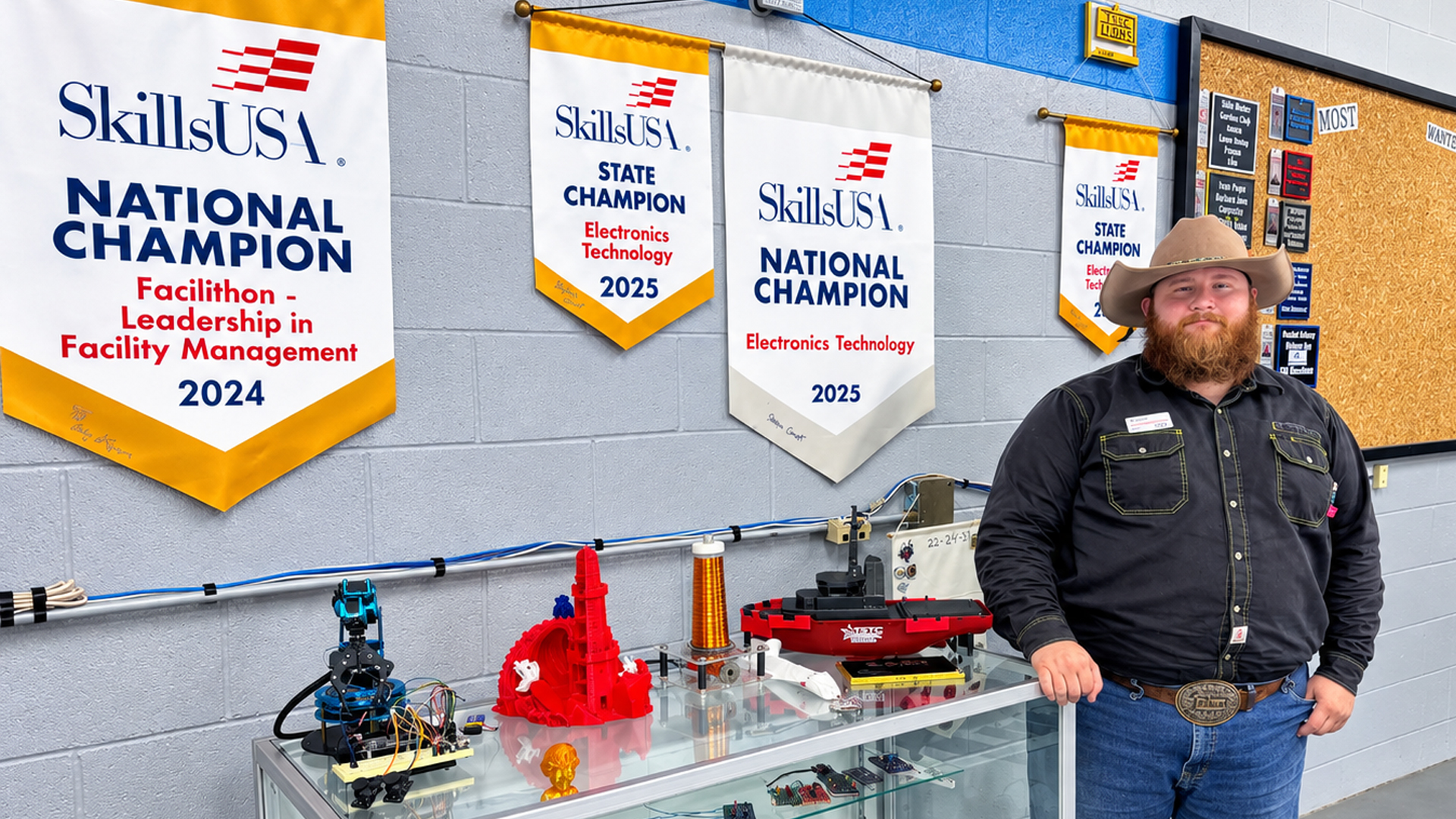
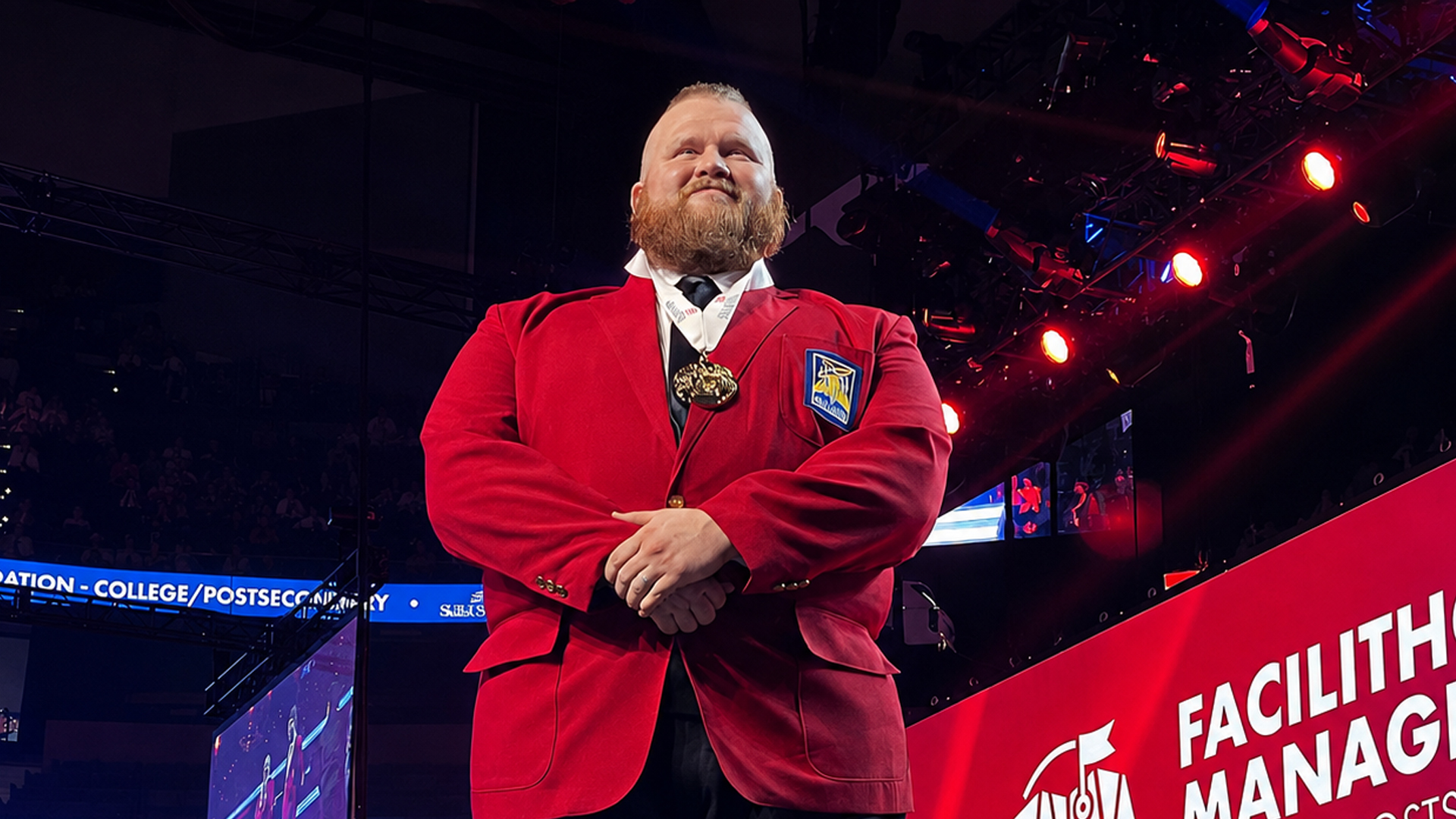
Toby was helping teach the program while still a student and is now a full-time instructor and SkillsUSA mentor. He should be because Toby brought home the national gold medal in 2024 in Facilithon.
What drives Toby to make sure students are ready for work? We sat down with him to find out in this candid conversation.
TSTC: You walked through these exact doors a few years ago as a student, left with a degree and a SkillsUSA national gold medal, and now you teach the Advanced Manufacturing program. When you look at an unprogrammed PLC rack or a cold robotic cell, what do you see that everyone else misses?
Toby: Prior to work history and TSTC, like most I would have just seen some unknown devices placed in their own isolated areas. Creating a sense of indifference, and thinking to myself if they were a needed tool or just a waste of electricity. Now when I look at these devices, I see an irreplaceable tool in the automation world. Something that needs an inquisitive mind and a drive to innovate an executable task.
TSTC: Industrial trade careers used to carry an outdated, grease-under-the-fingernails stigma. Today, your students are writing code that drives multi-million-dollar supply chains. How do you break through that old perception and convince a 19-year-old that robotics is the ultimate modern creative outlet?
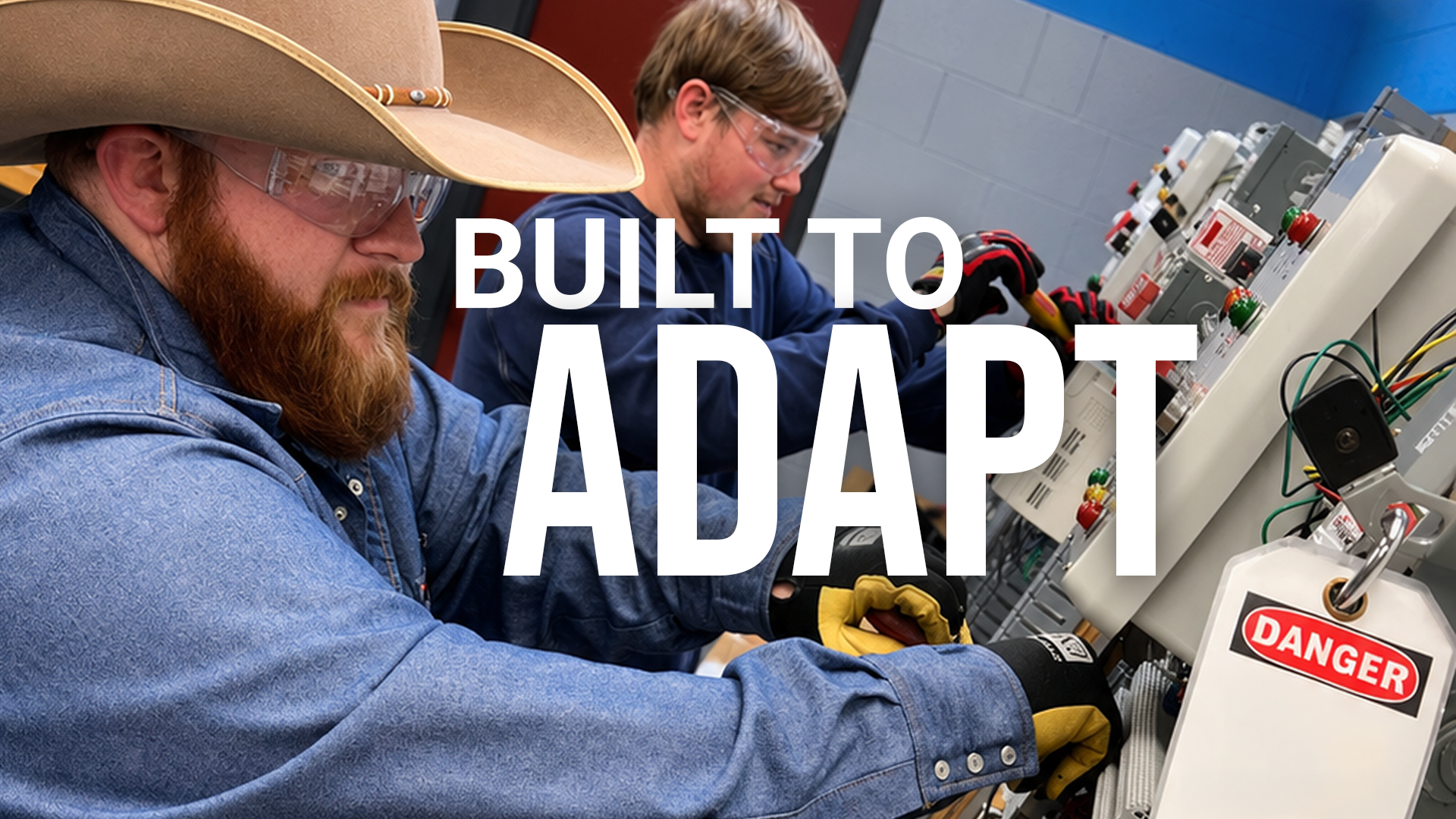
Toby: I would tell them to be proud of getting grease under their fingernails. I teach students to understand that when creating, making creative approaches to a problem, or just preventative maintenance you will still get dirty in-between point A to B. I come from a generation that grew up on the show “Dirty Jobs” with Mike Rowe. So, my students get exposed to all manner of skills that came from my time in the trades. They learn how to make a program, download it to a controller, but then actually have to work on the mechanical side as well. My students learn to cherish the grit they learn from the jobs most would not do. They experience clean and dirty environments because industry and trades need technicians who can shine in both environments.
TSTC: Before you were holding the national medal, you were grinding through wiring sessions in this exact room. What was the lowest point during your student days — that one brutal, frustrating wall where you questioned if you actually had what it takes to master this craft?
Toby: Lab 6.5! That lab was created to give the illusion that you have all your ducks in a row. Once the troubleshooting aspect is applied all bets are off. I spent way too much time on this lab, failing time and time again. It did come to a point where I questioned all that I had learned at TSTC and also my years out in the field working with these very same scenarios. It regrettably came down to one wire placed in one slot too far over, a single issue I kept overlooking. It was a humbling reminder that there is always more room to grow and to continue learning from these types of mistakes.
TSTC: Before beginning the program, you worked in the field. What experience led to you deciding to return to college? What did real-world, high-stakes industrial crisis response teach you that no textbook or pristine classroom lab ever could?
Toby: My wife was a recruiter here at the Sweetwater campus. I was working for Georgia Pacific in their AGV department. I always had some kind of story to tell my wife about how the robots were faulting out, what we did to fix them, how the build was going, etc. I mentioned one night that I wanted to get more immersed in the AGV department and settled on that being my career. My wife then mentioned a program she recruited for, I came in for a tour, and then the rest is history. Getting to see the classroom and the real-world side of industry was eye opening. I noticed very quickly the pace difference. The expectations from the students were not what we had in the field. On the job site anything can and will happen. If the systems are down you are needing to be able to get the facility back up and running in a timely manner. An effective technician needs to be decisive and conduct his/her self accordingly. The classroom cannot fully prepare you for the cultural shift, but we challenge the students often to simulate the struggle and better prepare them for the obstacles ahead.
TSTC: Winning national gold proves your personal capability, but teaching defines your legacy. Decades from now, when the hardware you program today is obsolete and your graduates are leading the industry, what is the ultimate standard you hope they carry forward from your classroom?
Toby: The ultimate standard that my current and future students need to have is integrity, work ethic, grit and a willingness to always learn and grow. Our world is always evolving. My students need to understand that this means they too must be able to learn and evolve with it. As the world continues to grow more advanced, they too will advance.
TSTC: Public discourse is obsessed with AI taking human jobs. As someone who trains the specialists who build, program and maintain the physical hardware that keeps the modern world turning, what’s the biggest misconception about automation today?
Toby: The biggest misconception is that fact alone. That AI will take human jobs and will be a robot led industry. This happened in the 1810s. Looms and other things considered trades at the time were being automated and this changed the need for human laborers doing the repetitive tasks for a “cheaper” automated option. Today it is similar, mostly more for repetitive pick and place tasks like assembly lines. Robots, at this time, are not able to take any human jobs in the skilled trade world. What Instructor Aaron Robinette said in class one day is best for this topic. “You cannot automate the automaters.” Which is to say that our students can rest assured that industry will always have a position ready for them and that they are essential to the growth of technology and the trades regardless of AI’s implementation.
TSTC: When you look at a talented rookie entering your program today, what is the single biggest technical or mental flaw you have to coach out of them — and what lesson from your own experience fixes it every time?
Toby: High schools are not what they used to be. These students I receive are expecting to just be taught to pass a test. They wait to be given an answer when they don’t know. On the job site you need to be able to problem solve and be self-starting and self-reliant. I coach them to be inquisitive in all of their endeavors, to teach themselves to want to look for the answer first and be creative in solving problems. When I was training individuals at the sheriff’s office if I trained them to be able to train another officer, instead of just trying to cram information into them. They were learning and retaining what I was giving them. They all will inevitably be the teacher one day. So, I teach them to be teachers.