

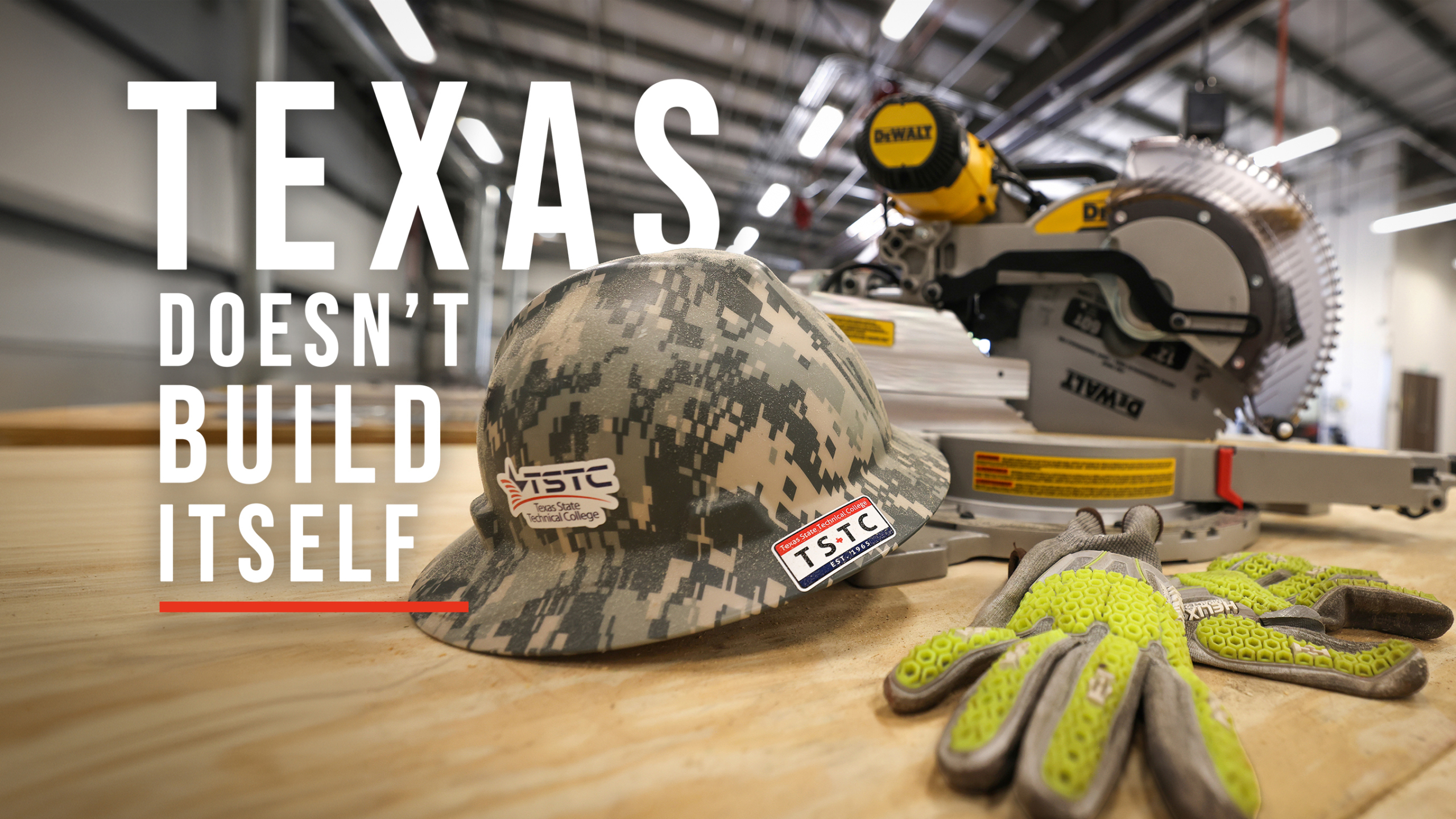
Building Beyond the Blueprint
As Fort Bend County grows, a shortage of skilled construction workers threatens to slow the homes and communities driving that expansion. Texas State Technical College is preparing the next generation of workers to help meet that demand.
Every new neighborhood begins with a promise: a place to call home, a community to belong to, and room for a family’s future.
But before the streets fill with cars and the lights shine from windows, someone has to pour the foundation, raise the walls, and build the roof. And as Fort Bend County continues to grow, one question becomes harder to ignore: Who will do the work?
The answer matters in one of the fastest-growing counties in the nation. Large-scale residential developments, including Austin Point, a planned community expected to bring approximately 14,000 homes to the region, reflect the scale of growth reshaping the Richmond-Rosenberg area. That growth creates opportunity, but it also highlights a challenge facing the construction industry: ensuring enough skilled workers are prepared to turn plans on paper into places where people can live and work.
For Shawn McNeil, building construction program team lead at TSTC’s Fort Bend County campus, that challenge represents an opportunity to make a difference.
“Fort Bend County is growing rapidly,” McNeil said. “It’s one of the fastest growing counties in the nation with huge residential expansion projects bringing in more people to this area, and that means we need people who can build the homes, businesses, and infrastructure that support that growth.”
At TSTC, the goal is to prepare those people.
Through hands-on instruction, industry-relevant training and connections with employers, the college’s Building Construction program is helping students develop the skills needed to enter an industry essential to Texas’ continued growth.
But the need for skilled workers raises a broader question, too: How can students prepare for careers that offer opportunity without taking on more educational debt than they can manage?
For students considering their futures, the construction trades may offer a path not only to employment, but also to financial independence, entrepreneurship, and the chance to help shape the communities around them.
The Workforce Gap
The demand for construction workers reaches far beyond a single trade.
Ron Rohrbacher, a member of the TSTC Board of Regents and owner of Rohrbacher Residential Construction Consulting LLC, has spent years working in construction training and development. He previously served as vice president of construction training, safety coordinator, and director of construction development and training for Perry Homes. He also serves in leadership roles with the Texas Association of Builders and participates in several organizations focused on the residential construction industry.
From his perspective, the workforce shortage affects nearly every stage of homebuilding.
“Well you know it’ll take all of the trades to build communities. We are short on all trades,” Rohrbacher said.
He pointed to the need for workers in HVAC, plumbing, electrical work, foundations, framing, and roofing.
While the mechanical trades often receive significant attention, Rohrbacher emphasized that the people who build the structures themselves cannot be overlooked.
It is a simple point with significant implications. A house cannot move forward without the people who build its foundation and frame its structure. Every trade depends on the work that comes before it.
“We have to look at building construction trades and technology because those are the people that will be trained to actually build the structures that we put the mechanicals in,” Rohrbacher added.
That makes building construction an essential part of the workforce conversation, not an afterthought. And when workers are difficult to find, the effects can reach beyond a construction site. McNeil said an insufficient supply of qualified craftspeople can delay projects, increase costs and slow the arrival of new housing.
“The average age of a construction worker is steadily rising and the demand in our regional area is steadily growing along with the number of residents in the greater Houston Area — specifically Fort Bend County,” McNeil said.
For a region counting on continued residential and commercial development, preparing the next generation of workers is about more than filling vacancies. It is about making growth possible.
The Hands Behind the Build
Construction is often measured in visible results: homes completed, developments opened and buildings brought to life. The workforce behind those accomplishments is less visible, but it is just as important.
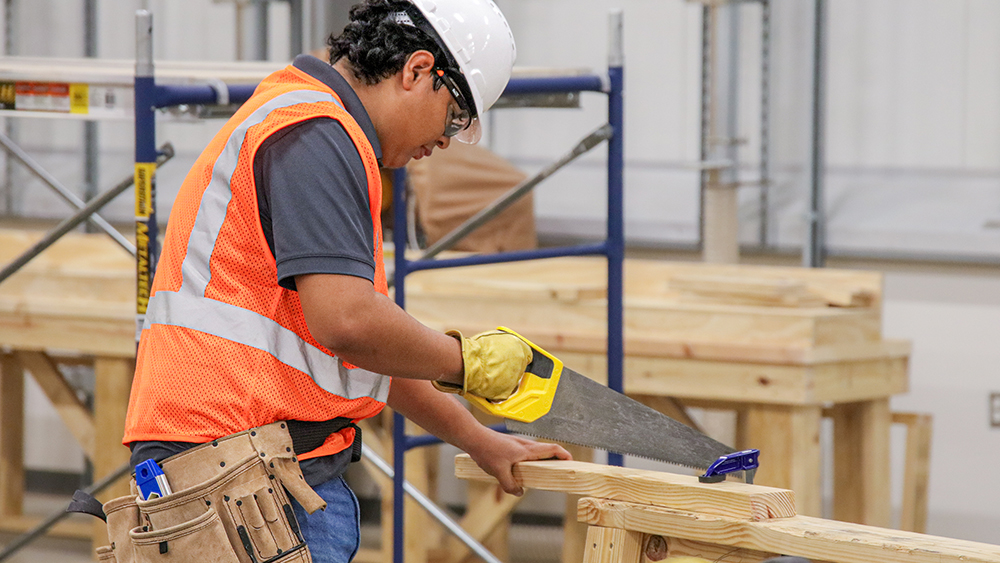
At TSTC Fort Bend, the Building Construction program is designed to give students opportunities to develop practical skills before entering the industry.
“At TSTC, we focus on hands-on learning,” McNeil said. “Students aren’t just learning construction concepts in a classroom; they’re applying those skills in our labs through hands-on activities involving tools, safety, carpentry, concrete, and site layout.”
The approach reflects a central reality of construction: employers need people who can translate knowledge into action.
“The challenge is finding people who have the hands-on skills, safety knowledge, and work ethic to step onto a job site and contribute on day one,” McNeil said.
That expectation helps explain why technical training matters. Knowing how construction works in theory is one thing. Understanding how to use tools, follow safety practices, and contribute to a team on a real project is another.
TSTC also emphasizes industry-relevant certifications and real-world expectations, giving students a foundation for the demands they may encounter after graduation. The objective is not simply to teach students about the construction industry. It is to help prepare them to participate in it.
Keeping Training Relevant
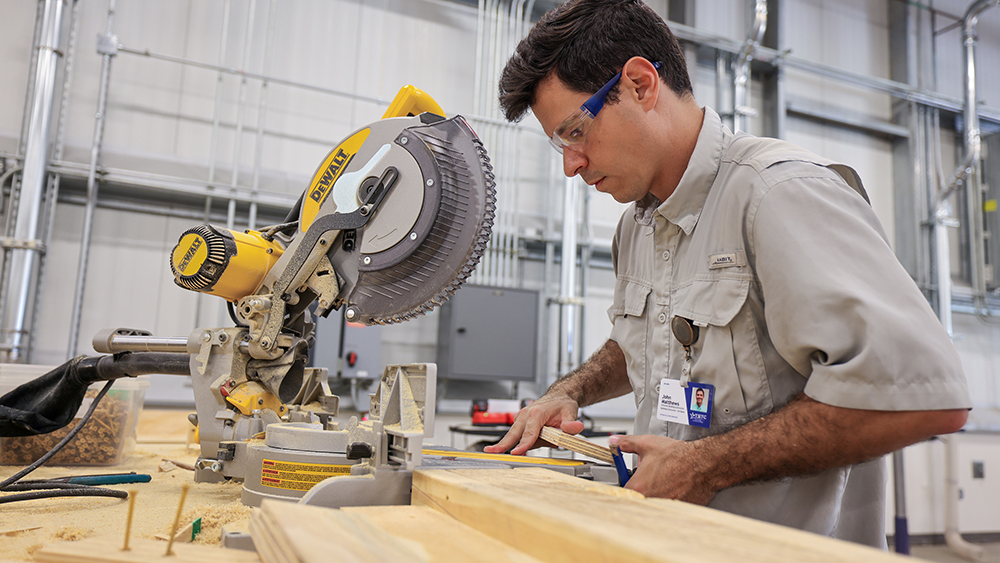
Training workers for today’s construction jobs requires more than developing a curriculum and hoping it meets employers’ needs. The industry changes, technologies evolve and regional construction practices can vary.
Rohrbacher sees TSTC’s relationship with employers as one of its most important advantages.
Unlike institutions that may develop programs without consistent input from the industries they serve, he said, TSTC actively seeks feedback from employers to help keep its training relevant.
“TSTC goes out to those employers and says we want to make sure our curriculum keeps pace with what you need in the field,” Rohrbacher said.
That connection matters because employers are in a position to identify which skills workers need, which practices have changed, and where training may need to adapt.
Rohrbacher also highlighted TSTC’s directors of alignment, who help maintain core curriculum across the state while accounting for regional differences in construction needs and practices.
The result, he said, is an approach that can respond to what employers in a particular part of Texas need rather than assuming every region operates the same way.
For McNeil, that relationship must continue beyond the classroom.
“We have to work together,” he said. “TSTC needs to understand what employers need, and employers need to be involved in helping us prepare students for those jobs.”
That collaboration can take several forms, including participation in annual advisory boards, equipment contributions, mentoring and hands-on learning opportunities outside the classroom.
McNeil’s goal is for TSTC Fort Bend to become a trusted workforce partner for local employers while helping students build meaningful careers.
When industry and education work together, students have a clearer path toward developing skills that employers actually need — and businesses have another avenue for finding qualified talent.
Careers That Build
The construction workforce conversation is also a conversation about opportunity.
For students weighing their next steps after high school, veterans transitioning to civilian careers, or adults looking for a new direction, building construction can offer a practical entry into an industry with a broad range of career possibilities.
McNeil said students can use the skills they develop to enter the workforce and build toward opportunities in supervision or construction management.
For students and families deciding what comes after high school, the choice also involves weighing the cost of education against the opportunities it can provide. Rohrbacher emphasized that technical education deserves greater consideration as students look for ways to develop marketable skills, establish careers, and work toward financial independence.
Rohrbacher added that more students are beginning to reconsider the traditional four-year college path as they weigh the cost of a degree against the opportunities it provides.
“They’re starting to have their heads turned a little bit where they’re saying, ‘Well, wait a minute. I go to a four-year school and I run up a hundred-thousand-dollar bill,’” he said, describing how graduates may end up working outside their field of study in jobs that don’t pay enough to offset the debt they’ve accumulated.
For students who want to enter a skilled trade, technical education offers another route into the workforce. Rather than assuming a traditional four-year degree is the best fit for everyone, students can explore training that focuses on the practical skills needed for specific careers. The cost and length of that training will vary by program, but the goal is to prepare students for employment in industries that need qualified workers.
Rohrbacher also highlighted TSTC’s employment-focused tuition refund model, which he described as an added measure of accountability. Under the Money Back Guarantee, eligible students may receive a refund of their tuition if they are unable to secure qualifying employment, subject to the program’s requirements.
For families considering their options, that emphasis on employment reinforces a central question: What will students be prepared to do when their education is complete?
Rohrbacher sees another possibility: entrepreneurship.
He said technical education should do more to help students understand how to turn their skills into businesses of their own. A worker who develops expertise in framing, roofing, tile setting or another trade could eventually build a crew, establish a company and create jobs for others.
“We want somebody to have enough experience and then enough confidence that he or she can start his or her own crew or business,” Rohrbacher said.
He sees that progression as one way to strengthen the construction workforce over time. When experienced workers establish businesses and hire additional employees, they create opportunities for more people to enter the trades, helping replenish the pipeline the industry depends on.
He also noted that students need more exposure to the practical side of entrepreneurship, including how to establish a business, form a limited liability company and understand taxes.
Technical ability can open the door, but business knowledge can help someone walk through it independently.
That perspective expands the role of workforce education. Preparing students for construction careers does not have to mean preparing them only for their first jobs. It can mean helping them develop the confidence and knowledge to become supervisors, contractors, and employers themselves.
Where Human Skills Matter
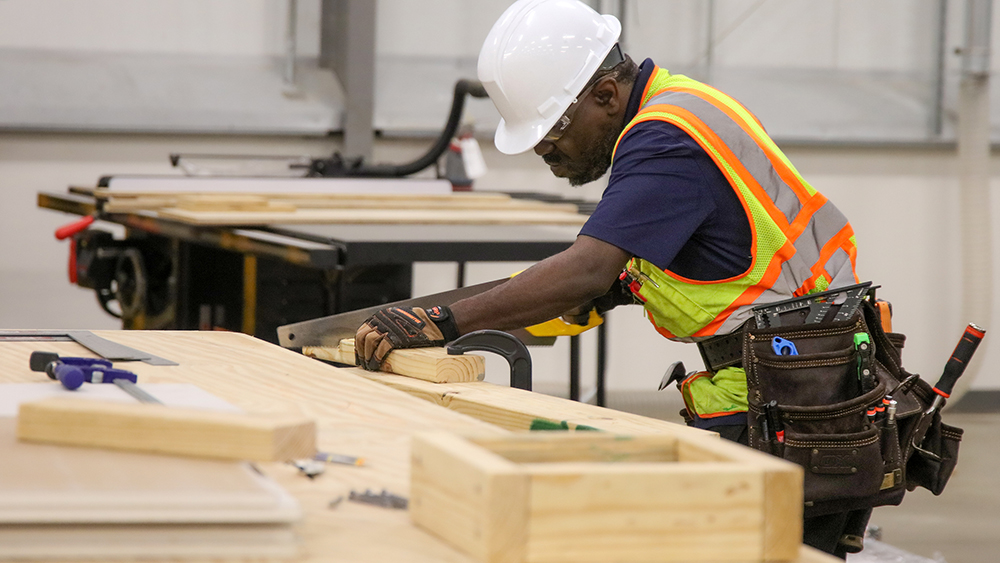
As artificial intelligence reshapes conversations about the future of work, Rohrbacher believes construction offers an important distinction — many of its essential tasks still require people with technical skills who can perform work in the physical world.
He acknowledged that AI will affect industries and jobs, but he views it primarily as a tool for construction rather than a replacement for the skilled trades.
“AI for the construction industry is just a tool,” Rohrbacher said.
He compared the technology’s potential role to the transition from traditional drafting tools to computer-aided design. The tools changed, but workers still needed to understand the parts, processes and principles behind the work.
The same principle applies to construction. Technology may change how work is planned, measured or managed, but building a home still requires practical knowledge and people capable of carrying out the work.
For students considering their futures, that distinction offers another reason to explore technical education. The specific tools used on a job may evolve, but the need for people who understand how to build, install and repair essential structures remains central to the industry.
No career is entirely immune to technological change. Still, Rohrbacher maintains that technical skills provide a strong foundation for navigating it.
People Powering Progress
Fort Bend County’s future will be shaped by more than the number of homes planned or the acreage developed. It will depend on whether the region can prepare and retain enough skilled workers to make those plans a reality.
The connection between housing and economic growth is direct for Rohrbacher. Businesses and families need places to live if a region hopes to attract them.
“If we don’t have housing, they’re not going to come,” he said.
For McNeil, meeting that demand begins with preparing people to do the work.
“We need to be proactive about preparing the next generation of construction workers so our workforce can keep pace with the growth happening around us,” he said.
That is where TSTC’s Building Construction program fits into the larger picture. By combining hands-on training with an emphasis on industry needs, the program is working to help students prepare for careers while helping employers find the talent needed to keep projects moving.
The work begins long before a project is completed. It starts when a student learns to use a tool safely, understands how a structure comes together, or develops the confidence to step onto a job site and contribute.
Those skills may not be the first thing people notice when they drive through a new neighborhood. But without them, the neighborhood would not exist.
Texas’ growth is often told through the buildings that rise from its landscape. The next part of that story belongs to the people learning how to build them, and the institutions and employers working together to prepare them.
At TSTC Fort Bend, that future is taking shape one skill, one student, and one foundation at a time.