

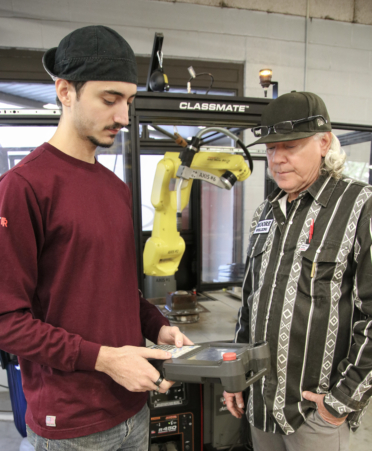
(HARLINGEN, Texas) – Robotic arms hum and sparks fly in Texas State Technical College’s welding labs, where students are learning the skills in welding automation that manufacturing and energy industries across the state depend on.
TSTC’s curriculum is designed to keep pace with those evolving needs.
Isaac Rivas, the lead instructor in TSTC’s Welding program at the Harlingen campus, emphasized that automation is not replacing welders — it is transforming and creating new career pathways for individuals who understand both manual and robotic processes.
Why has automated welding become a key priority for employers in the industry?
Automation enables manufacturers to increase production, improve consistency and manage the shortage of skilled welders. While employers are adopting automated welding to remain competitive, they still rely on trained workers who can operate, program and maintain these systems.
Are manufacturing employers placing more emphasis on automation or traditional welding?
Many manufacturers are ramping up their investment in automation, but traditional welding skills are still essential. We’re seeing a gradual, but steady rise in employers seeking skilled welders who can work effectively with robotic welding systems.
What is TSTC doing to keep its Welding program aligned with the industry’s growing emphasis on automation?
Our program provides hands-on training in welding automation, giving students experience in both traditional welding and the modern automated techniques used by employers.
How does hands-on experience in automated welding improve students’ career prospects?
Students trained in both manual and automated welding develop greater versatility and become highly sought after. Employers value welders who can operate robotic systems, troubleshoot automation and work in advanced production environments
According to onetonline.org, welders, cutters, solderers and brazers earn a yearly median salary of $49,830 in Texas. The number of these jobs in the state was expected to increase by 11% between 2022 and 2032, according to the website.
Registration for the spring semester is underway. For more information, go to tstc.edu.