

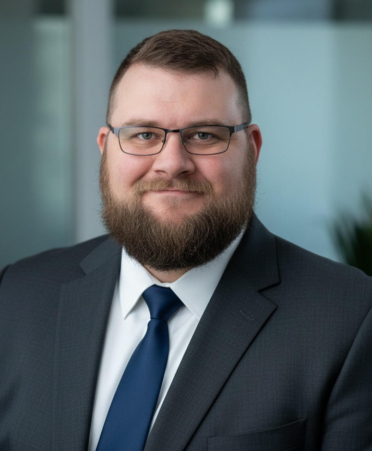
(MARSHALL, Texas) – Chris McKeithen, from Mount Vernon, is the founder and CEO of Aegis Cyber Defense, Inc., a nationwide company specializing in everything from exposure intelligence to software development.
He is mainly self-taught, but chose to attend TSTC to back his practical experience with educational credentials. He is on track to receive his associate degree in Cybersecurity in December.
Artificial intelligence (AI) has become a big discussion topic across the United States, and McKeithen shared why he feels the technology is somewhat misunderstood in the world of cybersecurity.
There’s a growing belief that AI will replace cybersecurity professionals. Why would you say this is a myth?
AI is not going to take anybody’s jobs. Period. The thing that’s going to take people’s jobs are the people that can leverage AI and use it appropriately. There’s people out there like, “You know what? I’m not going to use it.” They’re going to get left behind. If you use it as a tool, you’re going to be way ahead of everybody else that’s competing against you.
What parts of cybersecurity still require human judgment, experience and critical thinking?
AI can give you information, but it takes the human element in that to discern what is real, what’s not real, what to do about it, and what actions to take. The human has the ability to go off of expertise, their knowledge and their feelings. We have that gut response; AI doesn’t have that. They only know what they’re programmed to know, and some of it might be poor information that they’re gathering. For example, in my field, exposure intelligence, we have databases that we go off of. I do have an AI that will run a scan and tell me what (a company) has that’s exposed, and I have to personally go in, look at the information and decipher whether or not it’s a threat or if it needs to be exposed. There are some pieces of a business that need the exposure or else nobody is going to see them. You have to go in and make that judgment call.
How are cybersecurity roles changing because of AI?
If anybody knows anything about cybersecurity, you know it’s changing all the time. You have to continually be on your toes because there are new threats coming all the time. With the birth of AI and the capacity that we’re using it today, threat actors are able to do things quicker, because if you know what you’re doing, all you’ve got to do is prompt the AI correctly. If you want to set yourself apart, you have to be a forever student. You have to be able to listen, follow directions and give feedback when needed.
Why are TSTC programs like Cybersecurity and Computer Networking and Systems Administration still important in an AI driven world?
AI can’t run without networking. Somebody’s got to be able to put it all together, read the data and connect the wires. Networking and AI, they go hand in hand. AI can diagram, it can show you what needs to be done, it can build these systems for you, but you still have to go out and do it. As far as cybersecurity, it’s going to be very important to have cybersecurity personnel to regulate the AI, to make sure you put safeguards on AI. You’re going to be highly sought after if you know what you’re doing and you’re familiar with AI.
What would you say to a prospective student who is hesitant to enroll because they are worried AI will take over the field?
Understand that knowledge is power. The more knowledge you have, the more attractive you’re going to look to the job market. An institution like TSTC has a top-grade Cybersecurity program that is going to teach you what you need to know to be successful and it’s going to give you opportunities to use the tools that you’re going to use in the field.
Registration for the fall semester at TSTC is underway. For more information, go to tstc.edu.